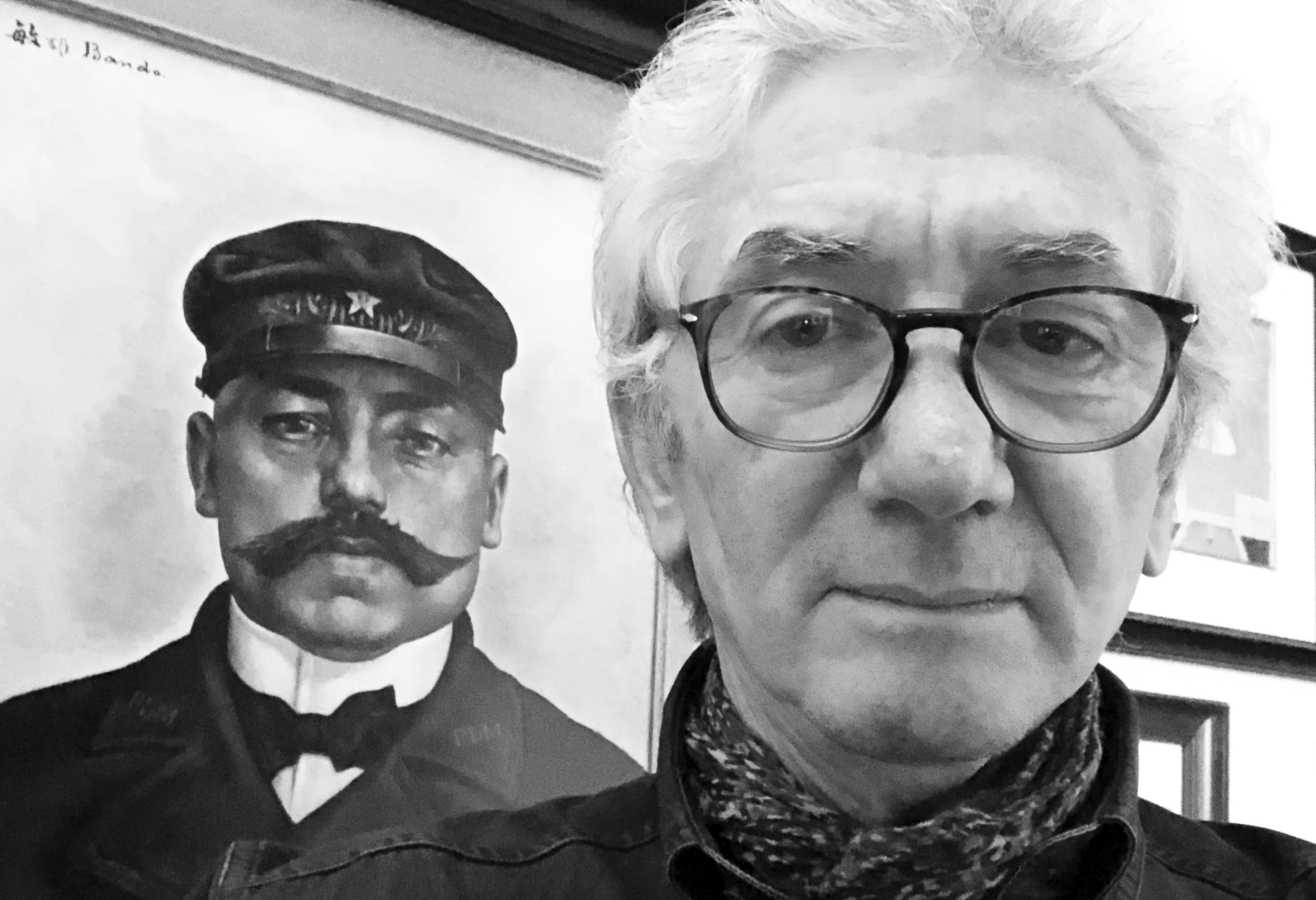
Jacques BOUTERSKY
TOSHIO BANDO (1895-1973), HIS LIFE, HIS WORK
Return to Experts
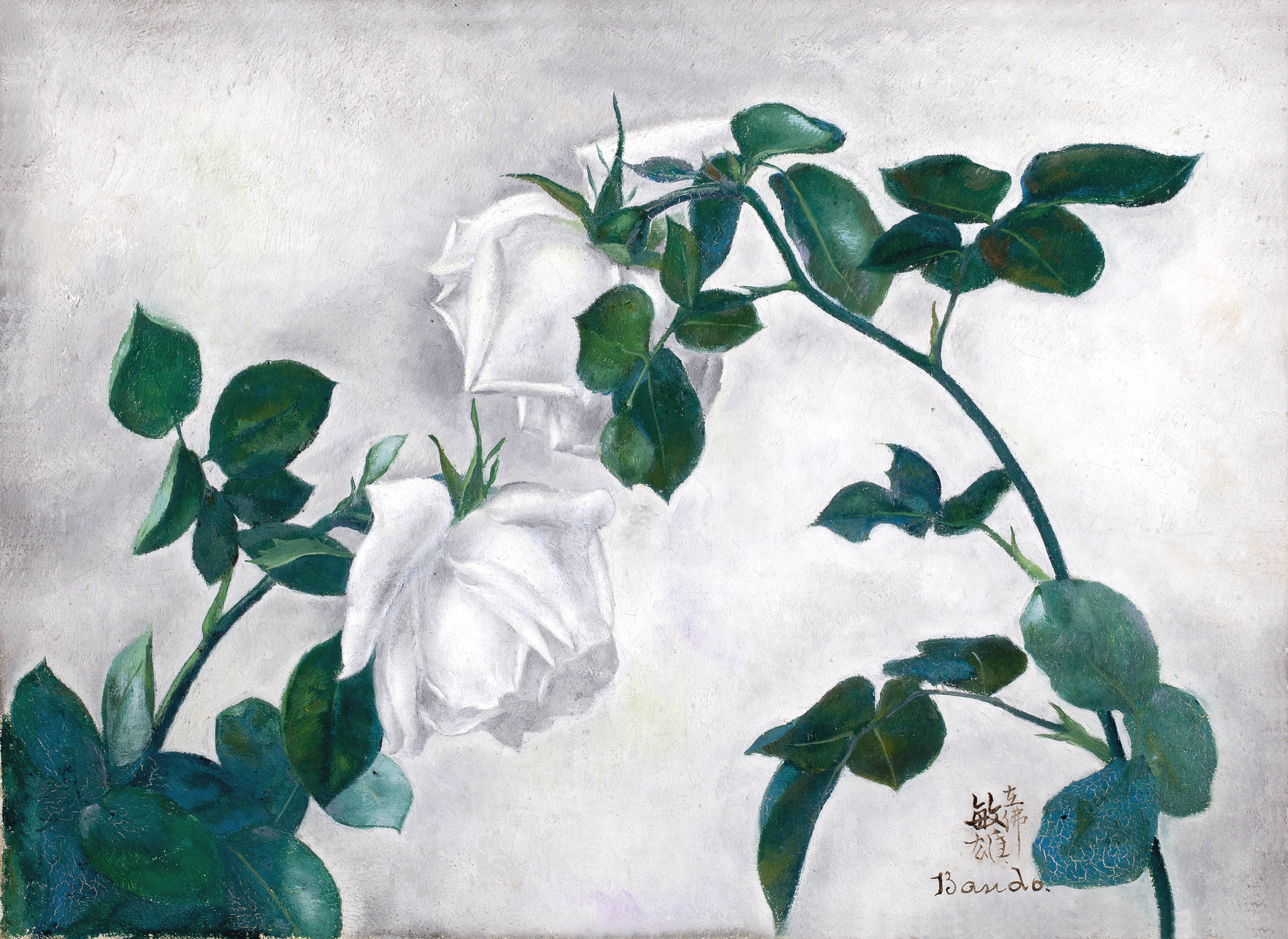
Toshio Bando - White Roses 1935 Oil on canvas, The Jariyah Collection, Semarang, Indonesia © Jacques Boutersky, Paris (detail)
The Expert
Toji Bando, widow of Toshio Bando, entrusted Jacques Boutersky over thirty years ago with the task of preparing the Catalogue Raisonné of her husband's work. This work is still ongoing, but since that time, more than 300 works have been discovered and described by this lover of fine painting. His first visits to the Hôtel Drouot date back to 1970 and preceded the opening of a gallery in Nice on the Promenade des Anglais in 1985. The following year, he returned to Paris where he opened a second gallery at the Louvre des Antiquaires, Place du Palais Royal. In 1986, by chance, he acquired a work by Toshio Bando at Drouot. This first purchase prompted him to meet the artist's widow. This first visit was followed by many others that became regular until the death in Paris, in 1994, of this charming elderly lady, a former pianist and privileged witness to the rich and intense life of her husband for forty years. Since 1989, Jacques Boutersky has been a member of the Union Française des Experts in order to better defend and promote recognition of the singularity and importance of Toshio Bando's work. He works in tandem with Sylvie Buisson, who also champions—particularly in Japan where he is not well enough known—the work of Toshio Bando, the only artist to have had the privilege of sharing Tsuguharu Foujita's studio between 1922 and 1924 in Montparnasse.The Artist
After sharing Foujita's studio upon his arrival in Paris, Toshio Bando chose to withdraw fairly quickly from the excessive effervescence of Montparnasse during the Roaring Twenties. His relationship with Foujita was, for both of them, a source of shared work and friendship; intimates of a famous model, Alice Prin, better known as Kiki de Montparnasse, Bando painted and photographed her with great talent. But the intensely social life that Foujita loved did not suit Bando. And that is why the journey of the Japanese painter, who arrived from Kobe in France in 1922, subsequently unfolded in the Parisian suburbs. Far from the crowds, he flourished, away from prying eyes, in the intimacy of a studio inhabited by his favorite objects and animals, subjects of his paintings. Foujita, who had quickly introduced him to his dealer Georges Chéron, had enabled him to rely on a loyal gallery until 1931. He remained faithful to him until the end. He had ensured a rapid start for the young Bando. Thanks to this small but dynamic gallery, Bando produced and exhibited regularly, particularly in all the Parisian painting salons. Critics compared him to Foujita for his very finely executed drawing and his faithful observation of nature and animals, but he always distinguished himself by expressing a true personality that was also noted. His style is more enveloping, more classical, less linear, his palette more nuanced in shades of gray and amber gradations, volumes and cast shadows are well rendered, and the texture of his painting is smooth and less glazed than that of Foujita. Bando is above all a discreet and private artist. A painter of interiority, he prefers to live and flourish in the calm of the Parisian suburbs and the contemplation of his studio rather than in the center of social life in Paris. He withdrew around 1925 to a house where his studio quickly became a sanctuary and the privileged place of an artist's life protected from the crowd. He does not consider returning to Japan. Especially since he has fortunately met the woman who will become his wife, a young French pianist whom he calls Toji and who gives him a daughter with whom he will share his passion for painting.The Classification of Works and Archives
Toji Bando, then Kimie Delaunay-Bando, opened their precious archives to Jacques Boutersky and provided their testimonies; it is a wealth of information not only about the artist Bando himself but also about his entire era. The artist had, in fact, carefully preserved and classified all press clippings concerning him from his first exhibitions until the 1960s. Many works by Toshio Bando are still in private collections even though public sales regularly present them. The market has few counterfeits, but it remains more prudent to consult the expert before any transaction. On the website toshio-bando.fr, Bando's life and work are detailed, as well as the procedure to follow to obtain an expert appraisal of a work by this artist.Contact
Jacques BOUTERSKY
23 avenue Félix-Faure
75015 Paris
+33 (0)6 12 98 40 08
boutersky@gmail.com
www.toshio-bando.fr
[UFE number : 330]