
The 1925 International Exhibition of Modern Decorative and Industrial Arts in Paris (often simply called the Art Deco Expo) was a pivotal moment in the history of design and architecture. UFE highlights this.
It was, moreover, from this exhibition that the term “Art Deco” originated. It took place in Paris between April 28, 1925 and November 8, 1925. Its aim was to showcase French modernity in the decorative arts, in opposition to the Art Nouveau style (much more organic, floral, and nature-oriented). The exhibition was dominated by French figures such as Ruhlmann, Lalique, Dunand, Süe and Mare, but it was also marked by the presence of Le Corbusier, who proposed a radical break toward modernism, foreshadowing the functional design that would prevail after 1930. 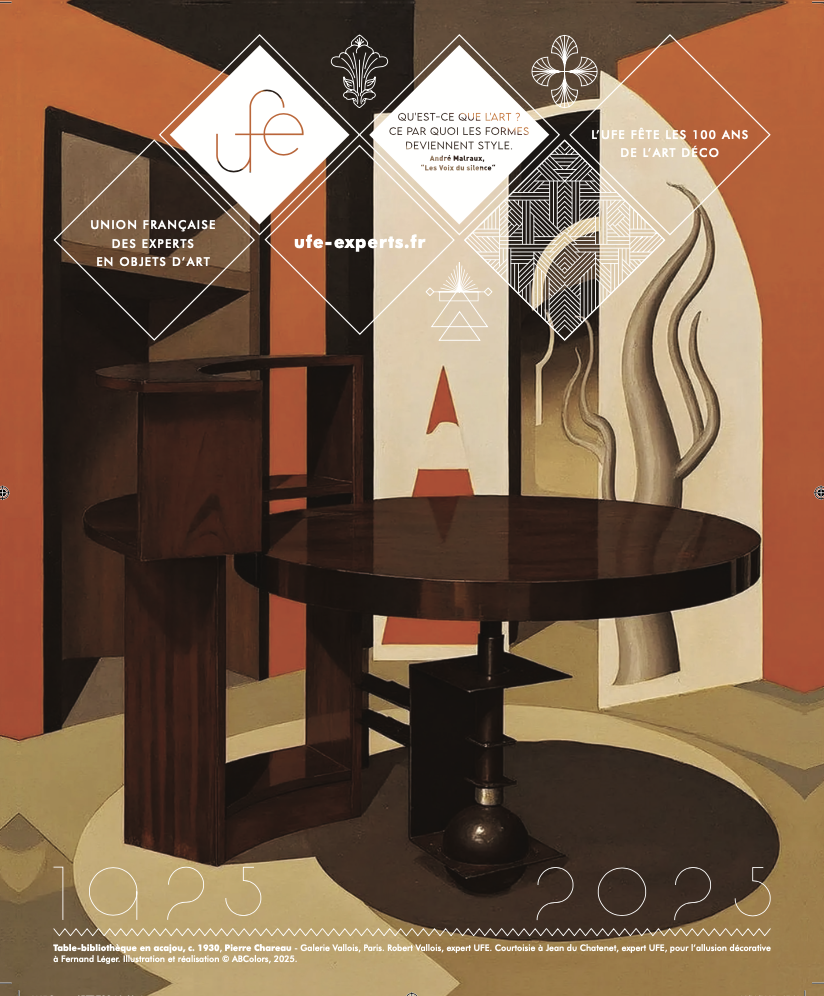
Representing France were Émile-Jacques Ruhlmann: undoubtedly the greatest Art Deco cabinetmaker, renowned for his refined furniture in precious woods; René Lalique : master glassmaker, known for his vases, jewellery and crystal objects; Jean Dunand: specialist in lacquer and hammered metal; André Mare and Louis Süe (founders of the Compagnie des arts français): influential decorators who promoted an elegant and accessible decorative art; Maurice Dufrêne: artistic director of La Maîtrise (Galeries Lafayette); Pierre Chareau : architect and furniture designer, more modernist in his approach; Paul Poiret: leading couturier, who presented textile creations and furniture inspired by his taste for the Orient and modernity.
Internationally, Le Corbusier: took part controversially with his Pavilion of the New Spirit, which proposed a more functional and rational vision of housing (foreshadowing modern architecture, breaking with the decorative luxury of the others); Josef Hoffmann (Austria): associated with the Viennese Secession movement and the Werkbund, he influenced a restrained, geometric aesthetic; Peter Behrens and other German designers, who followed the tradition of industrial design, as well as Soviet and Scandinavian designers, who promoted a more restrained and utilitarian design.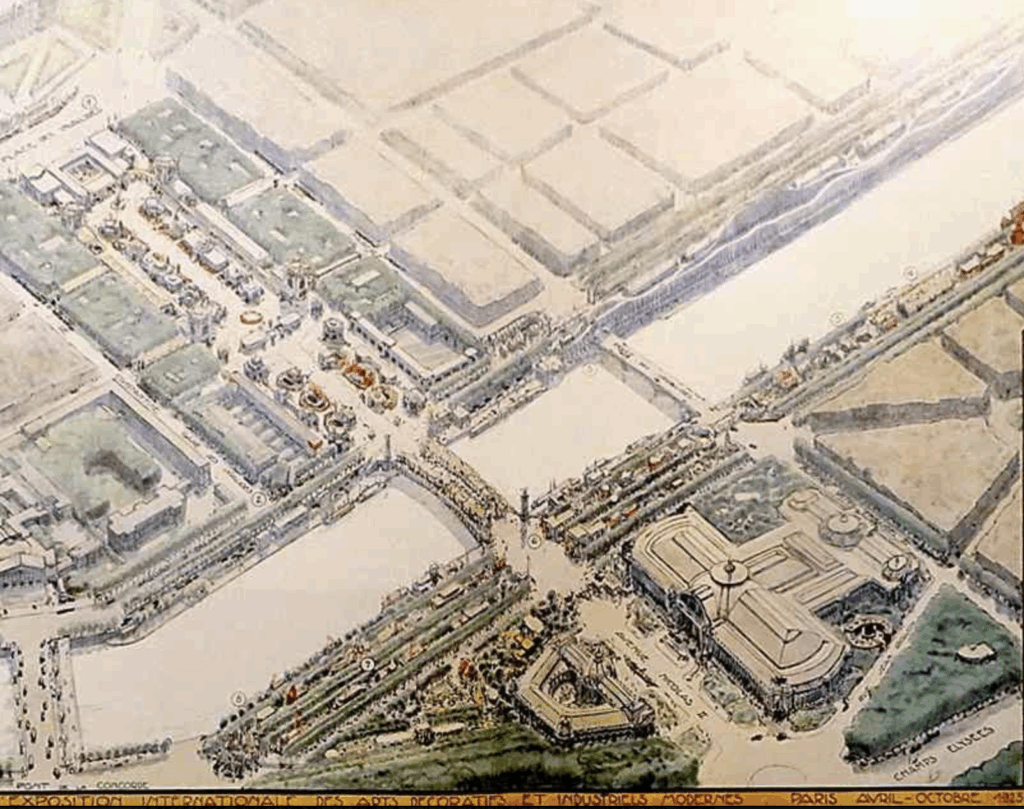
Painters were represented with numerous works in the various pavilions of the exhibition, which greatly contributed to the renown of their decorator friends. They included Jean Dupas, André Lhote, Louis Bouquet, Robert and Sonia Delaunay, Raoul Dufy, Fernand Léger, Marie Laurencin and certain Nabis such as Maurice Denis and Vuillard. Their role was to bring a pictorial and colourful dimension to the decorative ensembles, in keeping with the Art Deco spirit.
Since then, this movement has continued to shine and inspire new generations of creators.
We would like to thank our eminent colleague Robert Vallois, whose work contributes to the global momentum of the decorative arts, and who authorised us to use the image of a prestigious piece of furniture by Pierre Chareau from his collection, which therefore featured in our latest communication in issue 30 of the Gazette Drouot; we also thank our colleague Jean du Chatenet for giving us his consent to also mention Fernand Léger in the same communication produced by the ABColors studio.