Marc DUCRET
FRENCH ARTISTS' CERAMICS FROM 1860 TO 1945
Return to Experts
The Expert
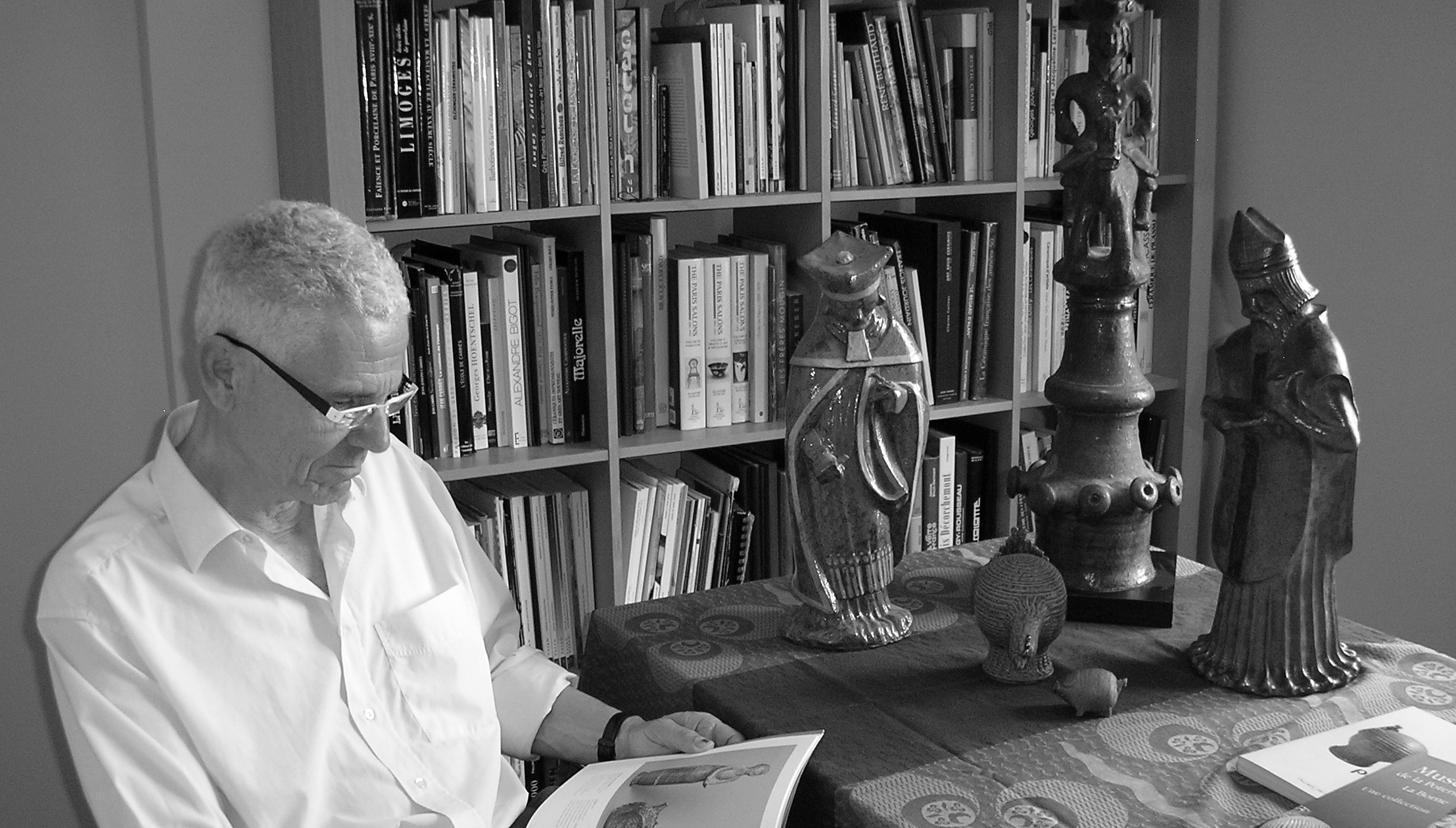
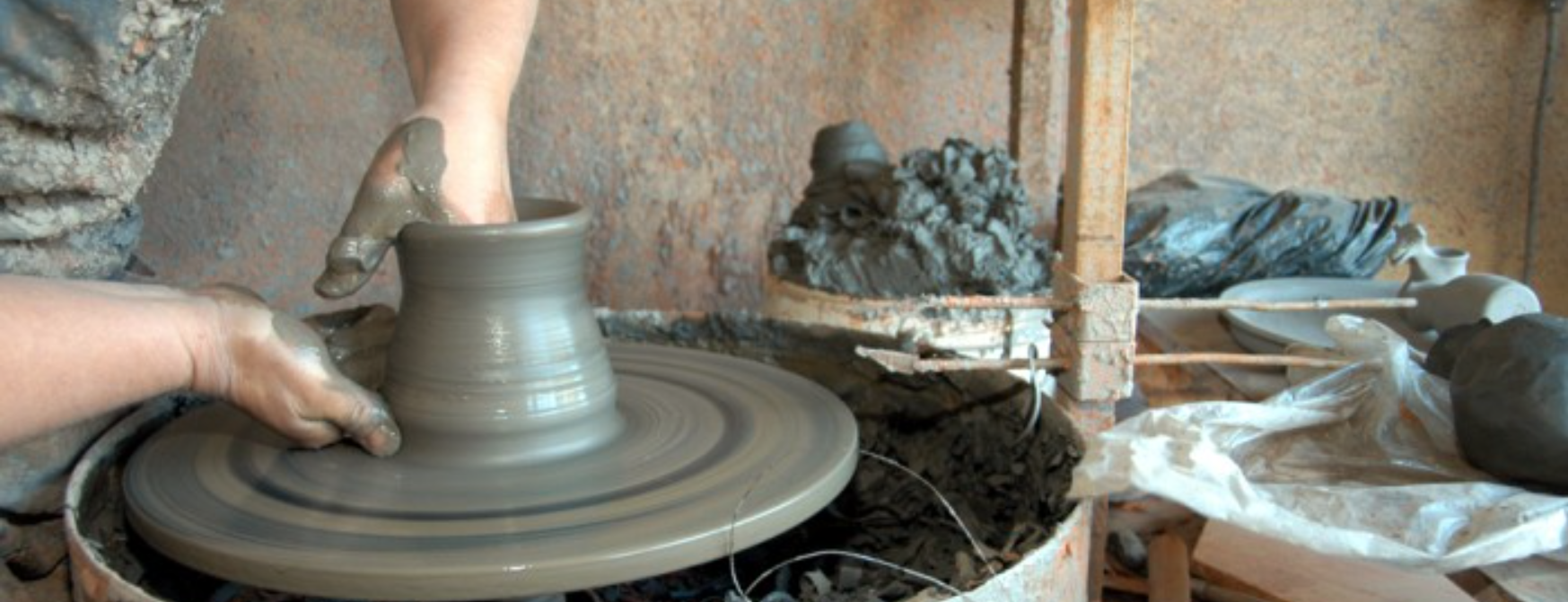
The Art Nouveau stoneware of the École de Carriès marked the beginning of Marc Ducret's passion for ceramics. He then considered the revival of this discipline as a whole, a period spanning from the start of the Second Empire to the Liberation, without forgetting the singular destiny of the Borne imagiers, primarily that of the Talbot family. In this field, our predecessors command modesty; their praise rarely ignored estimable creators, while also possessing an ability to identify powerful works. To be convinced of this, one need only read the commentaries of the time and examine the photographs illustrating them. Fortunately, curiosity and study have added to this restricted circle artists whose celebration was more discreet. This shadow zone covers a field of exploration that interest is eager to reveal, where aesthetic wonder aligns with the objectivity of artistic analysis and its social context. For the amateur, collecting justifies the quest. However, the act results from a high level of erudition, combining solid historical knowledge with a proper mastery of style in order to invest in a field much broader than the chosen specialty. It is also necessary to support one's desires with rational arguments that favor the perception of exchange values. Only the conjunction of these factors leads to the establishment of an indisputable reference system, building a bibliography worthy of honoring the subject at hand. Finally, technical imperatives must be treated with great rigor, as knowing which of the four ceramic categories were used remains fundamental—a precision that, moreover, can reflect a chronological evolution capable of shedding light on each person's work. It is in the continuity of such an approach that Marc Ducret aspired to expertise, viewed through the lens of transmission: a sharing of knowledge through research, writing, and, the ultimate sanction, publication. This commitment has opened the doors of museums, the display cases of galleries, and the cabinets of collectors, not to mention—a sign of confidence growing over time—access to numerous works and documents owned by family circles.Bibliography
Publications "The Carriès School - Ceramic Art in Saint Amand en Puisaye - 1888-1940", Marc Ducret and Patricia Monjaret, Les Éditions de l’Amateur, Paris, 1997. "Passion for Stoneware - The Carriès School 1888-1914 - Leproust Collection", Marc Ducret and Patricia Monjaret, Fondation Neumann, Hélium Edition, Auxerre, 2000 and 2001. "Traditional Stoneware of Puisaye-Berry: The Carriès School", Marc Ducret La Camosine Review, No. 115, The Annals of the Nivernais Region, 2004. "Paul Beyer" Beau Fixe Publishing, Lyon, 2006. "Claudine Monchaussé", The Ceramics and Glass Review, No. 148, 2006. Sèvres . Boulogne Billancourt - "Independent Ceramics" (for Paul Beyer) Collective work edited by Florence Slitine, Argus Valentines Publishing, Paris 2007. "Between Eclecticism and Orientalism: Laurent Bouvier" Review of the Society of Friends of the National Museum of Ceramics, No. 20, Sèvres 2011. "The Talbots - A Family of Artists" Review of the Society of Friends of the National Museum of Ceramics, No. 22, Sèvres 2013. "Jacqueline Lerat - The Requirement" Review of the Society of Friends of the National Museum of Ceramics, No. 24, Sèvres 2015. "La Borne Pottery Museum - A Collection" Association for the Safeguarding and Protection of the Pottery Heritage of the La Borne Site, 2016. "The Pioneers of Modern Ceramics: La Borne" (for Paul Beyer) Collective work, City of Bourges Publishing, 2018. "Ernest Chaplet - The Copper Red Revolution" Louvre Victoire Publishing, Paris, 2021. The book is available in bookstores and from Louvre Victoire Publishing www.editionslouvrevictoire.com contact@editionslouvrevictoire.com