Lison DE CAUNES
ANDRÉ GROULT, STRAW MARQUETRY, SHAGREEN AND TORTOISESHELL
Return to Experts
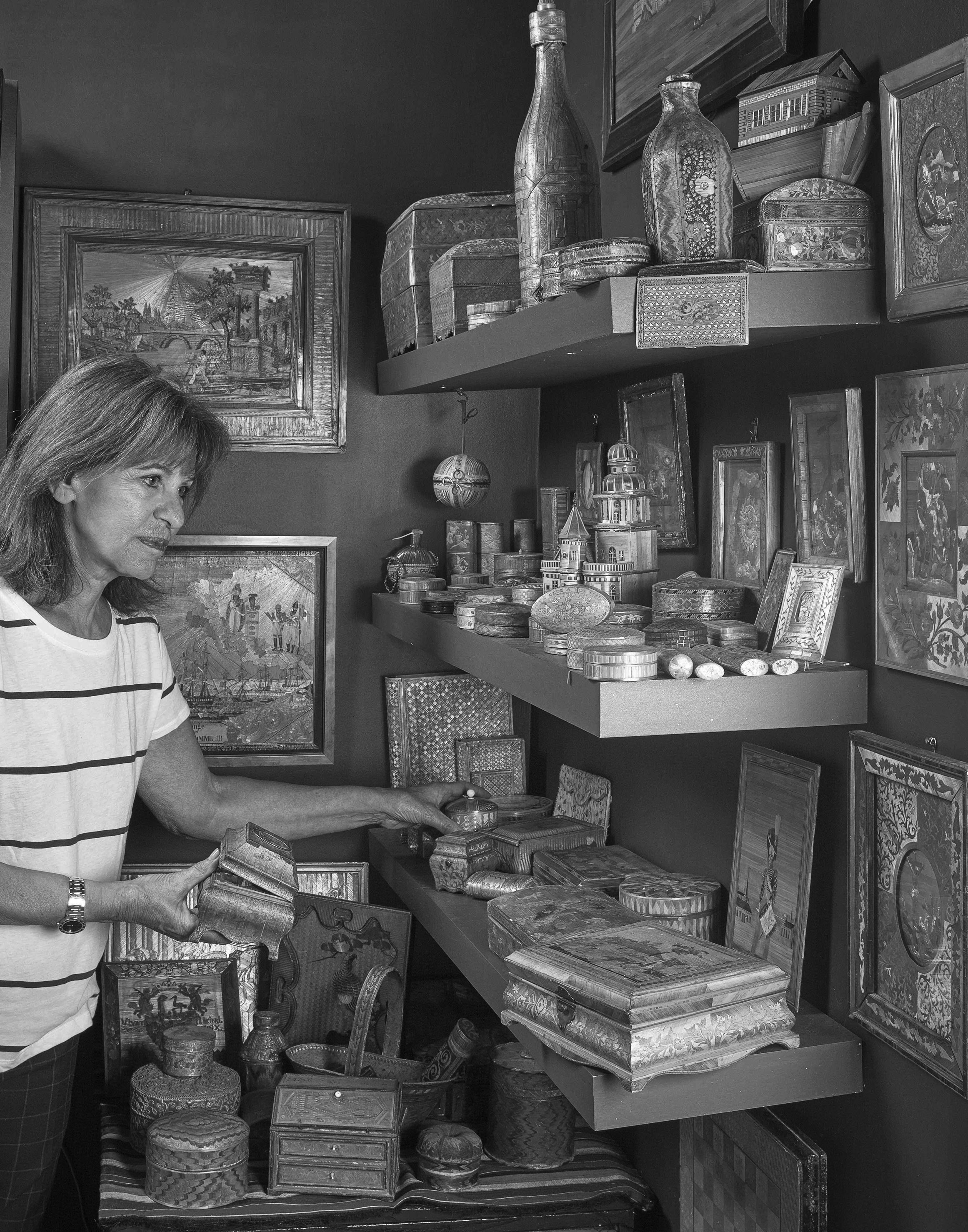
© Lison de Caunes, Paris
Lison de Caunes, the expert
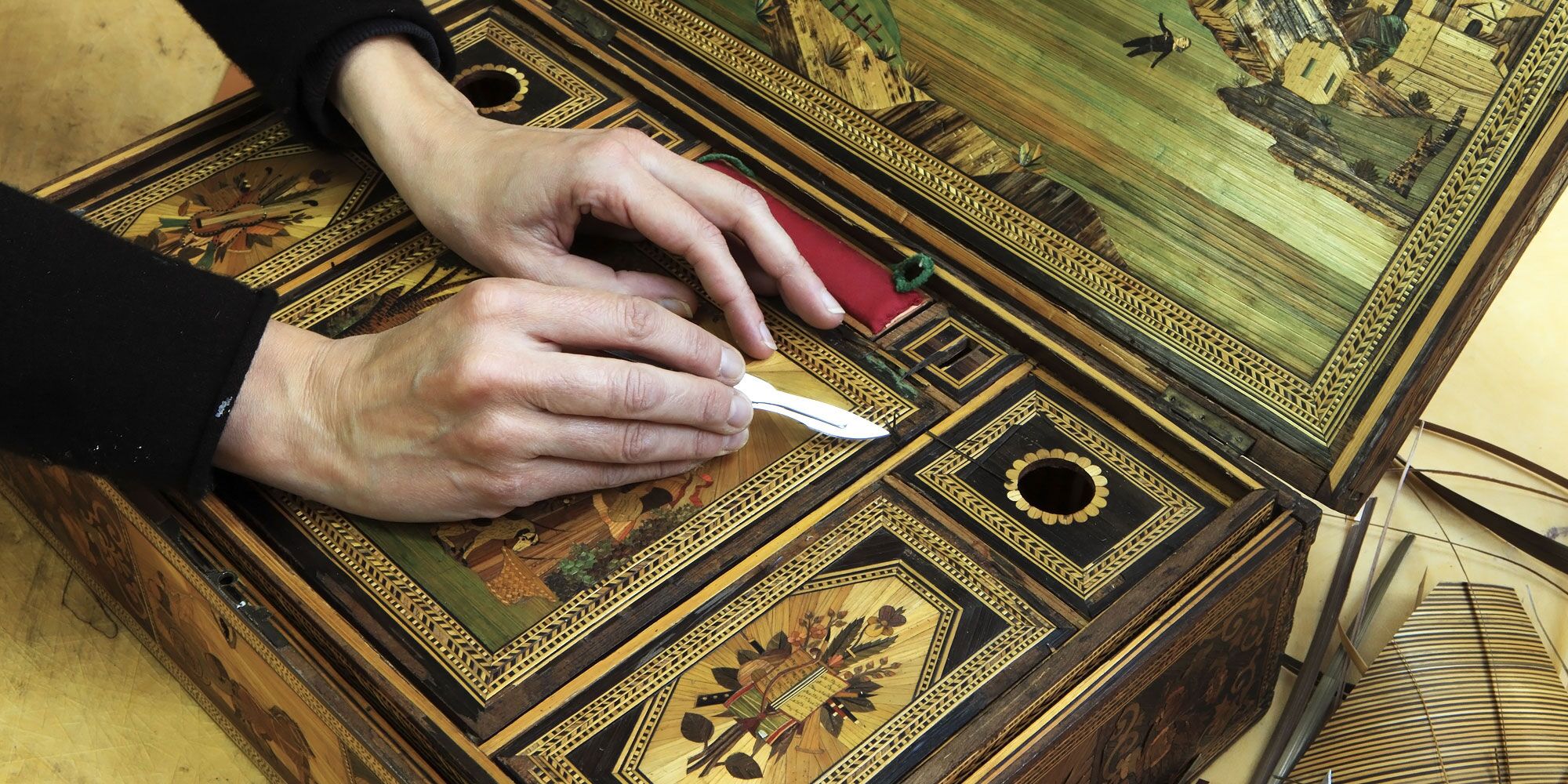
For Lison de Caunes, straw marquetry is a childhood memory. She became familiar with this material at a very early age in the workshop of her grandfather and master of Art Deco, the decorator André Groult. She returned to it later—after studying bookbinding—and revolutionized the technique using bookbinding tools such as the bone folder, from which she is never separated. After restoring the finest masterpieces of straw marquetry and becoming a specialist in the technique, she rehabilitated these poetic practices by restoring furniture and objects from the 17th century through to the Art Deco period. She has organized several exhibitions, written books on straw marquetry, and participates in numerous events to highlight this humble yet luxurious material that illuminates the most contemporary furniture with its shimmer. Lison de Caunes also devotes herself to the creation of furniture, objects, and wall coverings. Whether under her own name (Lison de Caunes Créations) or in collaboration with renowned interior architects and designers (Ateliers Lison de Caunes)—including Peter Marino, Jacques Grange, Maria Pergay, Hubert le Gall, Vincent Darré, and Mathieu Lehanneur, to name but a few. Numerous decors created by Ateliers Lison de Caunes are featured in luxury establishments: the Guerlain perfumery on the Champs-Élysées, the Louis Vuitton boutique on Place Vendôme, the Four Seasons Hotel in New York...Straw marquetry: object of desire, object of design
Before becoming an art form, straw marquetry was the poor relation of wood marquetry; it was used as a replacement for very expensive exotic veneers by cabinetmakers as early as the 17th century, and as a hobby and source of income for French and English prisoners and convicts. The meeting of a humble material, straw, and a demanding technique, marquetry, has produced both modest works and masterpieces. This production constitutes a heritage that was long neglected. Furniture, paintings, and boxes of all kinds were manufactured in several European countries, not only by craftsmen working in their workshops but also by monks and nuns in certain convents, by the poor housed in hospices, and by prisoners. The raw material used is rye straw, identical to that used for caning chairs, for example. It is harvested once a year in Burgundy by specialized cereal growers. Each stem yields an average of 2 to 3 strands of straw which, whether dyed or not, are opened and flattened manually. The resulting flat straw is then glued onto various supports using wood glue. Distinctions Maître d’Art (1996) Member of the Grands Ateliers de France Member of the Entreprises du Patrimoine Vivant (EPV) Knight of the Legion of HonourBibliography
Publications Lison de Caunes - La Marqueterie de paille, Éditions Vial, Paris 2004
Contact
Lison DE CAUNES
20-22 rue Mayet
75006 Paris
+33 (0)1 40 56 02 10
+33 (0)6 64 24 02 10
Showroom Par Excellence
450 West 18th Street
New York NY 10001, USA
ateliers@lisondecaunes.com
www.lisondecaunes.com
lisondecaunes@mail.fr
[UFE number : 426]