Hervé DUVAL
PICTORIAL CENTERS IN BRITTANY (1870-1940) / MINOR MASTERS OF MODERN AND CONTEMPORARY FRENCH PAINTING (1890-1990)
Return to Experts
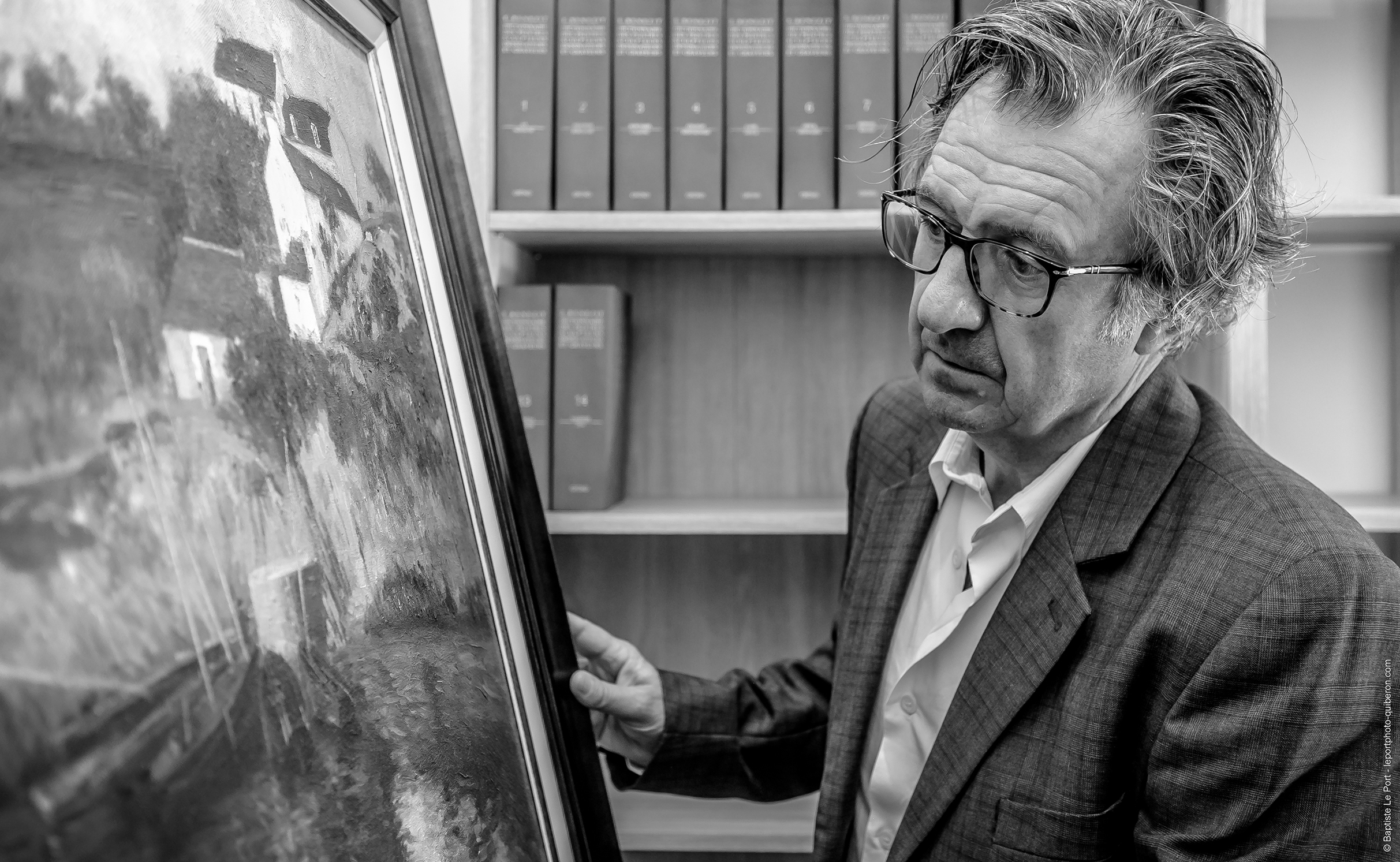
 A native of Brittany, Hervé Duval began collecting works on paper by painters of the Pont-Aven group at a very young age.
After a professional career in the bancassurance sector in Paris, he returned definitively to his first passion: modern art and, more particularly, Breton painting from the late 19th century and the first half of the 20th.
Expert, exhibition curator, lecturer
After training at the École du Louvre, Hervé Duval opened his first gallery in Quiberon in 2000, followed by a second in 2016. In 2012, he established an expert office in Paris with a bibliographic collection of over 300 references devoted to painters who worked in Brittany between 1870 and 1940. From 2011 to 2020, he served as exhibition curator on seven occasions at the request of museum institutions. He wrote scientific and historical notes that served as the guiding thread of the exhibitions; he selected and authenticated works from public and private collections, then actively participated in the scenography, the writing of catalogues, and the promotion of the exhibitions in the media.
Since 2012, at the request of museums and private foundations in France and abroad, Hervé Duval has also served as a lecturer on the themes of aesthetic creation movements, artist groups established in Brittany, and the careers of painters who stayed or lived there. He has thus contributed to rehabilitating forgotten artists. In particular, he brought to light the work of Yves de Kerouallan (1895-1984), for whom he also compiled the catalogue raisonné.
Brittany: a territory where the revolutions of modern art converge
Over time, Hervé Duval has expanded his expert work and field of competence to encompass the various pictorial centers that draw their origins from an exceptional and uninterrupted ferment of artistic creation in Brittany between 1870 and 1940.
While the synthetism of Bernard and Gauguin, an ephemeral pictorial innovation, was decisive in the genesis of modern art, Pont-Aven was not the only favored location for painters in Brittany. Many important artists identified with different parts of Brittany, bringing other major pictorial revolutions there. This was the case with plein air landscape painting with Eugène Boudin in the Quimper region as early as 1855, Impressionism with Claude Monet at Belle-Île in 1886 and then with Armand Guillaumin in 1895, Neo-Impressionism with Paul Signac at Concarneau in 1891, not to mention the very early Fauvist incursions into Brittany by Matisse as early as 1895, followed by Robert Delaunay between 1903 and 1906, and especially the regular presence of Jean Puy from 1898 onward.
After Gauguin's definitive departure, the Post-Impressionists of the Galerie Durand-Ruel (Moret, Maufra, Loiseau, Puigaudeau) also continued to travel through Brittany, as did Henri Martin and Henri Le Sidaner.
Bridges were built between the different movements of modern painting, creating other resonances. This was the case between Japonisme and the engraved works of Henri Rivière, between Symbolism or the Nabis and the spiritual or allegorical works of Albert Clouard and Maurice Chabas, between Cézannian influences and the deconstructed or "cubist" coastal landscapes of Conrad Kickert, Georges Hanna Sabbagh, Adolphe-Marie Beaufrère, and Jules Leray. Not to mention the "Bande Noire" on the Odet side, which practiced chiaroscuro punctuated with color, emphasizing on canvas a realistic and melancholic Brittany between classicism and modernity (Charles Cottet, Lucien Simon, André Dauchez...).
Pictorial centers in Brittany (1870-1940)
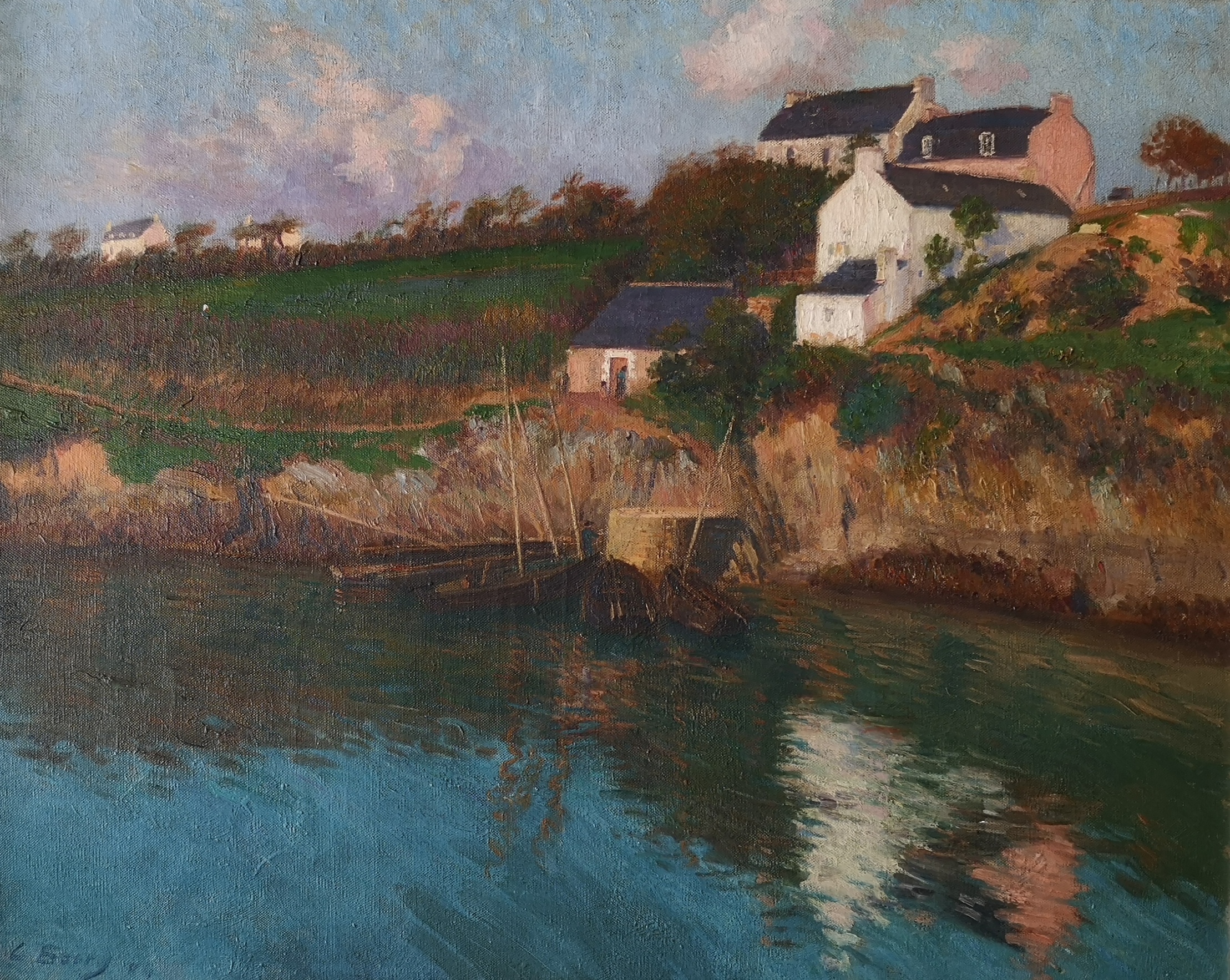
Thus, between 1870 and 1940, common orientations and exchanges of experience gave rise to and developed pictorial centers throughout Brittany. The Concarneau group, composed in particular of Alfred Guillou, Achille Granchi-Taylor, Henri Barnoin, and Fernand Legoût-Gérard, treated subjects of ethnographic inspiration. The Ville Close of Concarneau also attracted foreign painters who were more audacious in their treatment of scenes of daily life, such as the American Charles Fromuth or the New Zealander Sidney Thompson. Other communities of artists of Breton, Parisian, or foreign origin gathered in Le Faouët, around Cap Sizun, in the Bay of Douarnenez, and in the Bigouden region. Among them were Louis-Marie Désiré Lucas, Henri-Maurice Cahours, Lionel Floch... For decades, the history of modern painting was thus written in Brittany. To such an extent that a true identity culture emerged in the minds of painters at the beginning of the 20th century. Strong personalities began to trace the lines of a renewal of Breton painting. They addressed ethnographic or landscape themes while abandoning classicism. This was the case with colorists such as Jean-Julien Lemordant and Pierre de Belay, expressionists such as Maurice Le Scouezec and the Belgian Paul-Auguste Masui, and then the unclassifiable: the mystic Jean-Georges Cornélius and the historical illustrator Ernest Guérin. Each would favor color, line, volume, or symbol with their own style. During this interwar period, other artists focused on the hard labor of fishermen in the ports or the unwavering faith of the Bretons as depicted in the works of Yves de Kerouallan and d’Émile Guillaume. The birth of Decorative Arts and then Applied Arts in the postwar years opened new perspectives in Brittany. The "Seiz Breuer" collective, gathered around René-Yves Creston, disrupted folkloric forms and married all forms of art with Celtic reference to Art Deco trends. Decorative art was transformed through new processes and the widespread teaching of technical arts. Mathurin Méheut embodied this competence alone, although he was above all an immense draftsman, a true reporter of daily life in Brittany sketched from life.
A proven methodology
It is within this abundance of pictorial centers in Brittany that Hervé Duval establishes his field of expertise. The latter is defined by a comprehensive vision of all aesthetic and historical currents of painting in Brittany, including bridges and cross-influences over the decades.
Hervé Duval's research is based on historical and scientific references (catalogues raisonnés, museum archival and documentation centers, exhibition catalogues, artist monographs...). His expertise first focuses on verifying the origins and provenance of the entrusted work; he then establishes a condition report on the state of the work—if necessary with the assistance of specialists: pigment chemical analysis laboratories, restorers... He often compares the studied work with another already referenced work by the same artist. The search for similarities—line, brushstroke, chromatic palette, compositional structure, composition, signature...—can support the final expertise. Finally, ongoing contacts and relationships with art professionals allow him to enrich his research with the opinions of leading specialists.
________________________________________________________________________________________________________________________
Hervé Duval expands his specialty by embracing more generally the painting of masters and minor masters of modern and contemporary French painting between 1890 and 1990
A native of Brittany, Hervé Duval began collecting works on paper by painters of the Pont-Aven group at a very young age.
After a professional career in the bancassurance sector in Paris, he returned definitively to his first passion: modern art and, more particularly, Breton painting from the late 19th century and the first half of the 20th.
Expert, exhibition curator, lecturer
After training at the École du Louvre, Hervé Duval opened his first gallery in Quiberon in 2000, followed by a second in 2016. In 2012, he established an expert office in Paris with a bibliographic collection of over 300 references devoted to painters who worked in Brittany between 1870 and 1940. From 2011 to 2020, he served as exhibition curator on seven occasions at the request of museum institutions. He wrote scientific and historical notes that served as the guiding thread of the exhibitions; he selected and authenticated works from public and private collections, then actively participated in the scenography, the writing of catalogues, and the promotion of the exhibitions in the media.
Since 2012, at the request of museums and private foundations in France and abroad, Hervé Duval has also served as a lecturer on the themes of aesthetic creation movements, artist groups established in Brittany, and the careers of painters who stayed or lived there. He has thus contributed to rehabilitating forgotten artists. In particular, he brought to light the work of Yves de Kerouallan (1895-1984), for whom he also compiled the catalogue raisonné.
Brittany: a territory where the revolutions of modern art converge
Over time, Hervé Duval has expanded his expert work and field of competence to encompass the various pictorial centers that draw their origins from an exceptional and uninterrupted ferment of artistic creation in Brittany between 1870 and 1940.
While the synthetism of Bernard and Gauguin, an ephemeral pictorial innovation, was decisive in the genesis of modern art, Pont-Aven was not the only favored location for painters in Brittany. Many important artists identified with different parts of Brittany, bringing other major pictorial revolutions there. This was the case with plein air landscape painting with Eugène Boudin in the Quimper region as early as 1855, Impressionism with Claude Monet at Belle-Île in 1886 and then with Armand Guillaumin in 1895, Neo-Impressionism with Paul Signac at Concarneau in 1891, not to mention the very early Fauvist incursions into Brittany by Matisse as early as 1895, followed by Robert Delaunay between 1903 and 1906, and especially the regular presence of Jean Puy from 1898 onward.
After Gauguin's definitive departure, the Post-Impressionists of the Galerie Durand-Ruel (Moret, Maufra, Loiseau, Puigaudeau) also continued to travel through Brittany, as did Henri Martin and Henri Le Sidaner.
Bridges were built between the different movements of modern painting, creating other resonances. This was the case between Japonisme and the engraved works of Henri Rivière, between Symbolism or the Nabis and the spiritual or allegorical works of Albert Clouard and Maurice Chabas, between Cézannian influences and the deconstructed or "cubist" coastal landscapes of Conrad Kickert, Georges Hanna Sabbagh, Adolphe-Marie Beaufrère, and Jules Leray. Not to mention the "Bande Noire" on the Odet side, which practiced chiaroscuro punctuated with color, emphasizing on canvas a realistic and melancholic Brittany between classicism and modernity (Charles Cottet, Lucien Simon, André Dauchez...).
Pictorial centers in Brittany (1870-1940)
Thus, between 1870 and 1940, common orientations and exchanges of experience gave rise to and developed pictorial centers throughout Brittany. The Concarneau group, composed in particular of Alfred Guillou, Achille Granchi-Taylor, Henri Barnoin, and Fernand Legoût-Gérard, treated subjects of ethnographic inspiration. The Ville Close of Concarneau also attracted foreign painters who were more audacious in their treatment of scenes of daily life, such as the American Charles Fromuth or the New Zealander Sidney Thompson. Other communities of artists of Breton, Parisian, or foreign origin gathered in Le Faouët, around Cap Sizun, in the Bay of Douarnenez, and in the Bigouden region. Among them were Louis-Marie Désiré Lucas, Henri-Maurice Cahours, Lionel Floch... For decades, the history of modern painting was thus written in Brittany. To such an extent that a true identity culture emerged in the minds of painters at the beginning of the 20th century. Strong personalities began to trace the lines of a renewal of Breton painting. They addressed ethnographic or landscape themes while abandoning classicism. This was the case with colorists such as Jean-Julien Lemordant and Pierre de Belay, expressionists such as Maurice Le Scouezec and the Belgian Paul-Auguste Masui, and then the unclassifiable: the mystic Jean-Georges Cornélius and the historical illustrator Ernest Guérin. Each would favor color, line, volume, or symbol with their own style. During this interwar period, other artists focused on the hard labor of fishermen in the ports or the unwavering faith of the Bretons as depicted in the works of Yves de Kerouallan and d’Émile Guillaume. The birth of Decorative Arts and then Applied Arts in the postwar years opened new perspectives in Brittany. The "Seiz Breuer" collective, gathered around René-Yves Creston, disrupted folkloric forms and married all forms of art with Celtic reference to Art Deco trends. Decorative art was transformed through new processes and the widespread teaching of technical arts. Mathurin Méheut embodied this competence alone, although he was above all an immense draftsman, a true reporter of daily life in Brittany sketched from life.
A proven methodology
It is within this abundance of pictorial centers in Brittany that Hervé Duval establishes his field of expertise. The latter is defined by a comprehensive vision of all aesthetic and historical currents of painting in Brittany, including bridges and cross-influences over the decades.
Hervé Duval's research is based on historical and scientific references (catalogues raisonnés, museum archival and documentation centers, exhibition catalogues, artist monographs...). His expertise first focuses on verifying the origins and provenance of the entrusted work; he then establishes a condition report on the state of the work—if necessary with the assistance of specialists: pigment chemical analysis laboratories, restorers... He often compares the studied work with another already referenced work by the same artist. The search for similarities—line, brushstroke, chromatic palette, compositional structure, composition, signature...—can support the final expertise. Finally, ongoing contacts and relationships with art professionals allow him to enrich his research with the opinions of leading specialists.
________________________________________________________________________________________________________________________
Hervé Duval expands his specialty by embracing more generally the painting of masters and minor masters of modern and contemporary French painting between 1890 and 1990
- Before 1945
- Minor masters of French painting through regionalism (Breton, Norman, Provençal schools, Creuse Valley-Crozant)
- Movements: Symbolism, Pont-Aven and the Nabis (1890-1920), Fauvism and Cubism
- Artists belonging to so-called "post" movements (followers or under the influence of Impressionism, Cubism, Fauvism, ...)
- between 1900 and 1930: Interwar painting (Forces Nouvelles group...) 1930-1940
- After 1945
- Lyrical abstraction 1945-1965
- Geometric abstraction 1945-1965
- Return to figuration (Poetic Reality....)
- New Realists 1960-1970
- Supports/Surfaces 1970
- Narrative figuration 1960-1980
- Free figuration 1980
Bibliography
Bibliography "Yves de Kerouallan, shadows and lights in Brittany" Exhibition catalogue, Musée de Pont-Aven, 2011 [Catalogue Raisonné in progress] "The painters of Pont-Aven around Paul Gauguin" Exhibition catalogue, Atelier Grognard – Rueil-Malmaison – 2013 "The painters of the Provençal landscape" Exhibition catalogue, Atelier Grognard – Rueil-Malmaison, 2014 "The Bozos, fishing and traditions in Mali" Exhibition catalogue, Musée de la Pêche – Concarneau, 2014 "Modernity in Brittany (1 and 2)" Catalogues of the two exhibitions, Musée de Pont-Aven, 2017
Contact
Hervé DUVAL
8 and 17 rue de Port-Maria
56170 Quiberon
+33 (0)6 03 21 17 26
+33 (0)2 97 30 48 77
carnetdevoyages@wanadoo.fr
[UFE number : 477]