
GLASSMAKING ART
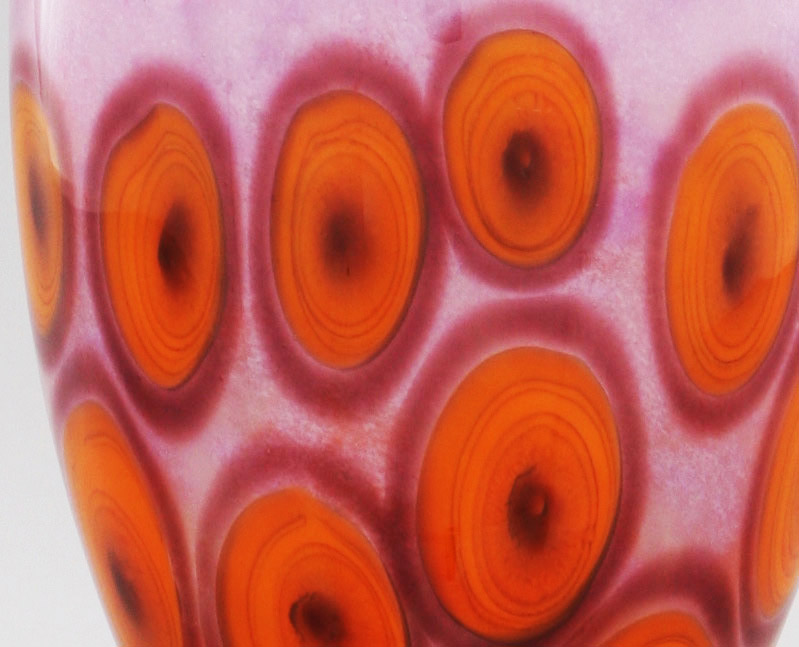
© UFE, Paris - Glassmaking Art; ill. by expert Jean-Pierre Serre - Schneider Vase - Cloisonné Series - Love Decoration 1924-1928
Learn More
Glass, this fascinating material, allows the artist to use a multitude of creative techniques and combine them infinitely. It can be worked hot or cold, blown, fused, deformed, colored, painted, engraved, spun, or glued to create an infinite variety of forms.
Since the 4th millennium BCE, when vases, princely table cups, and funerary urns became widespread in Egypt, artists and craftsmen have continuously explored different glassworking methods to create true works of art. Over the centuries, techniques have evolved and the artist has become a virtuoso with complete freedom to exploit molten material and imprint their talent upon it.
The art of glassmaking has been transmitted from century to century in Venice, which ultimately supplanted Oriental production in the 15th century; Murano then entered its brilliant period: its ewers and cups attracted all of Europe and even the Muslim princes of Asia, who came to acquire them.
Although Venice remains one of the European capitals of glass, Germany was the first to break free from the Venetian monopoly, followed by the France of Louis XIV and Colbert.
The history of glassmaking techniques is complex and fascinating; the lineage of great decorators, designers, and industrialists of Art Nouveau and Art Deco in the 20th century enriched it considerably.
Among the major innovators, Jean Daum established his glassworks in Nancy in 1891, Émile Gallé founded the École de Nancy in 1901, and René Lalique established his own glassworks in 1908. 350 signatures collaborated with the Daum Frères company. Charles Schneider founded his glassworks Le Verre Français and the Schneider line in 1913 with his brother Ernest in Épinay-sur-Seine; it became the largest art glassworks in Europe during the 1920s-1930s.
Eastern France rivaled Venice. Having fallen out of fashion after the war, art glassware regained ground in the 1970s-1990s and continues to rise in value and captivate collectors worldwide, particularly Japanese and Asian collectors.
Expert appraisal is obviously essential to exclude counterfeits from purchases and sales. Caution is advised, as imitations of antique glassware are numerous and deceptive.
Discover Our experts
PHILIPPE Michel-Ange
RENÉ LALIQUE AND HIS WORK
PLAISANCE Arnaud
20TH CENTURY EUROPEAN DECORATIVE ARTS AND GLASSWARE
Jean-Pierre SERRE
THE WORK OF MASTER GLASSMAKER CHARLES SCHNEIDER