Paul ARTHUR
ART NOUVEAU CERAMICS (PARTICULARLY FRENCH)
Return to Experts
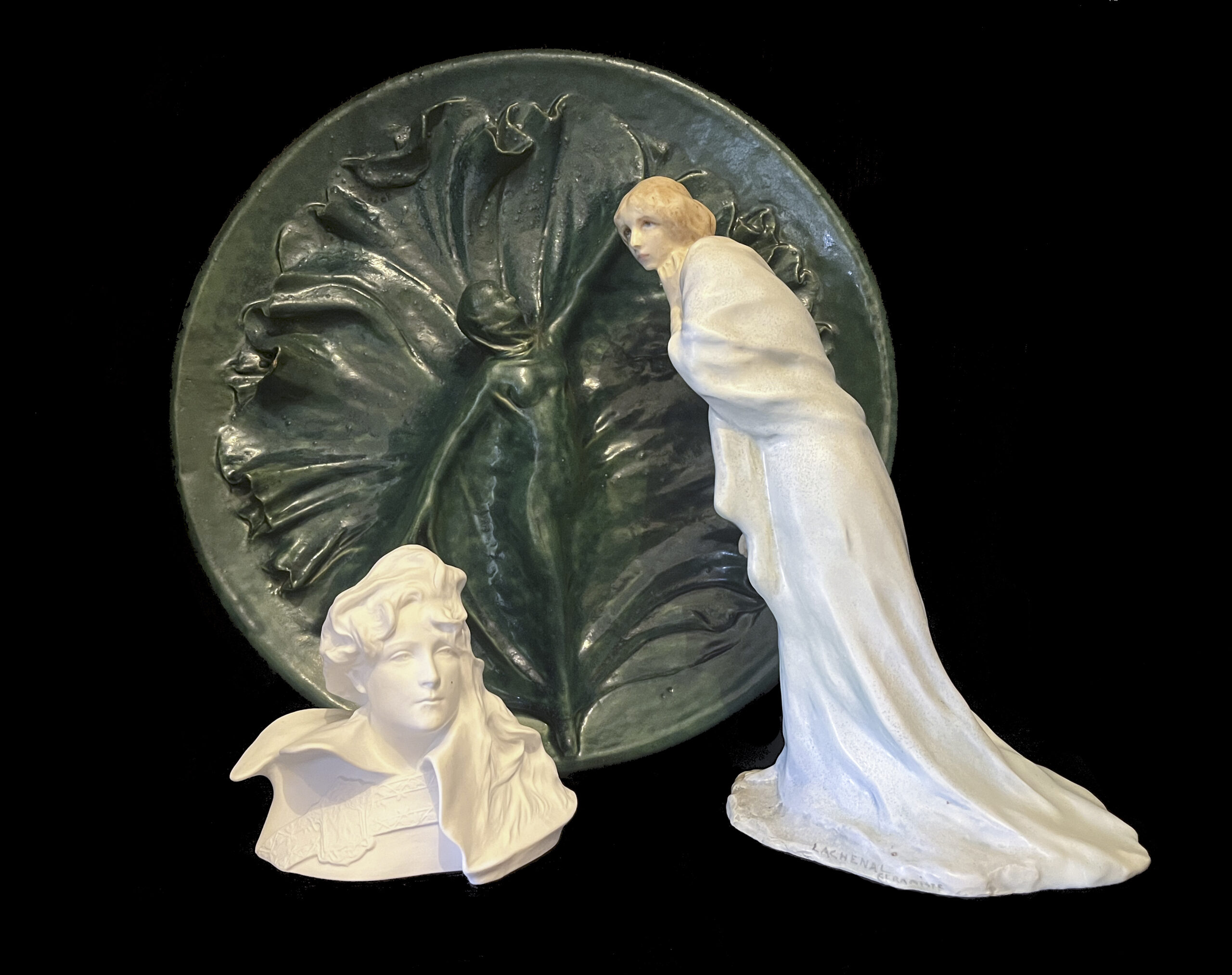
Celebrities of 1900, from left to right: Sarah Bernhardt, Loie Fuller, Eleonora Duse (private collection). archives of the expert, Paul Arthur.
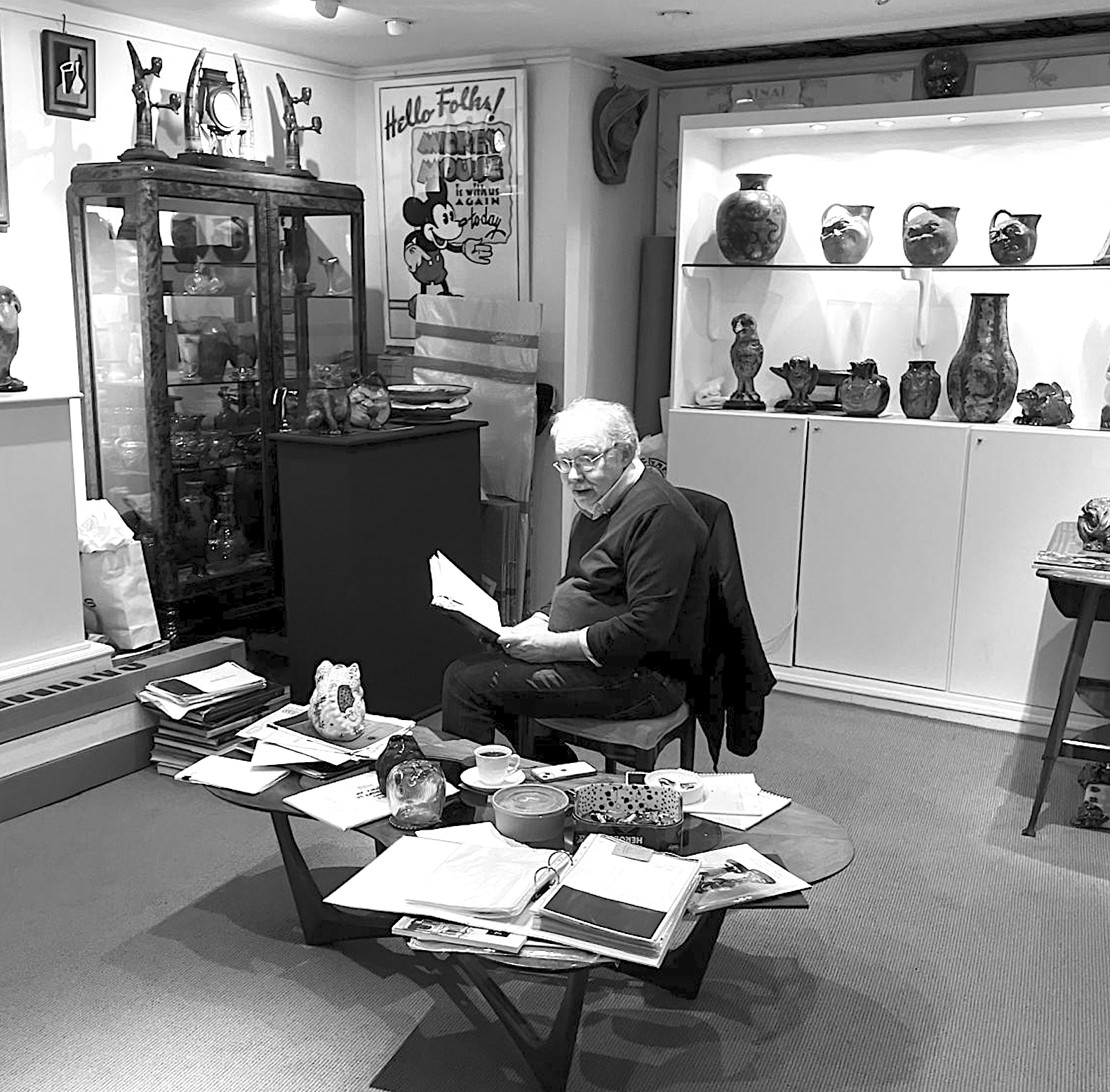
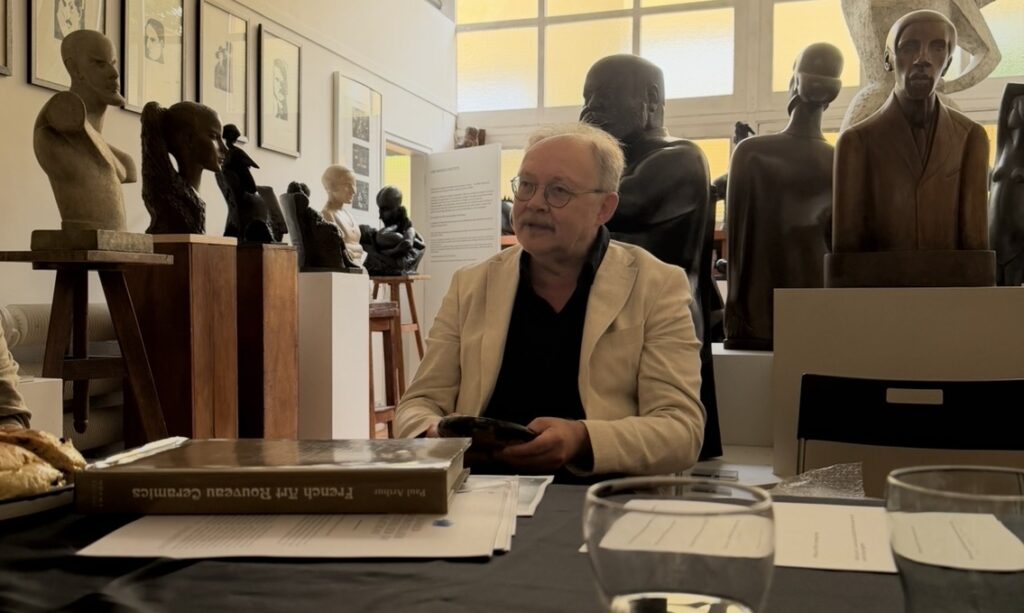
Expert Paul Arthur, his sources, his passions, his journeys.
{%CAPTION%}
… It was my mother’s passion for antiques, and the fact that she was born in Trieste, formerly the port of Vienna, that
first directed my interest toward the Arts and Crafts movement in Great Britain and the Vienna Secession, the
former being a precursor and the latter a fundamental component of the broader movement known as
Art Nouveau.
(…) While many collectors focused on glass, primarily for its aesthetic qualities
I began to take a particular interest in French Art Nouveau ceramics, conducting
research into their identification, their meaning, as well as the lives and contexts of the artists and ceramists who
created them.
(…) Despite several excellent studies devoted to Art Nouveau in France and worldwide, notably the works
of Maurice Rheims (1964), Victor Arwas and other authors, as well as monographs on particular artists and
workshops — such as Jean d’Albis on Chaplet (1976), or those by Horst Makus and others on
Dalpayrat (1998) — the only general study on Art Nouveau ceramics after the splendid work L’Art de la
poterie en France de Rodin à Dufy, published in 1971 by the Société des Amis du Musée national de céramique, was La
Céramique Art Nouveau by Edgar Pélichet, published in 1976. Although groundbreaking, a careful reading of Pélichet’s work
revealed numerous errors and omissions. This is how my annual pilgrimages to
France began, and more particularly to Paris, to meet experts and collectors, and to work in museums,
libraries, and archives. These trips were quickly followed by more distant study trips: to
Belgium, Germany, Switzerland, Argentina, and the United States, where, unfortunately, much of the European
decorative art has now found refuge.
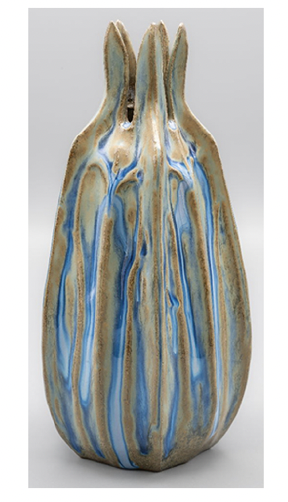
(…) To me, Art Nouveau ceramics are much more than just aesthetically pleasing objects.
They bear witness to the immense social and cultural upheavals that occurred at the end of the 19th and beginning of the 20th century, at the dawn of modernity.
They open a window onto a new era of discovery and the profound transformations that society itself was undergoing. While embodying and reinterpreting many
aspects of the past, they also reveal the impact of new discoveries. Japonism and Orientalism, for
example, reflected the geographical and cultural horizons opened by Western imperial expansion. Nature,
too, inspired both by the East and by a deeper, almost Darwinian, knowledge of the faunal and
botanical world, became a central source of artistic renewal. Symbolism, meanwhile, reflected
the analysis and expression of the complexities of the human psyche — its repressions, anxieties, desires, and
aspirations — illustrating the fin-de-siècle fascination with the divided self, explored with such influence by figures
such as Sigmund Freud, and anticipated in different ways by Charles Baudelaire and Jean-Martin Charcot.
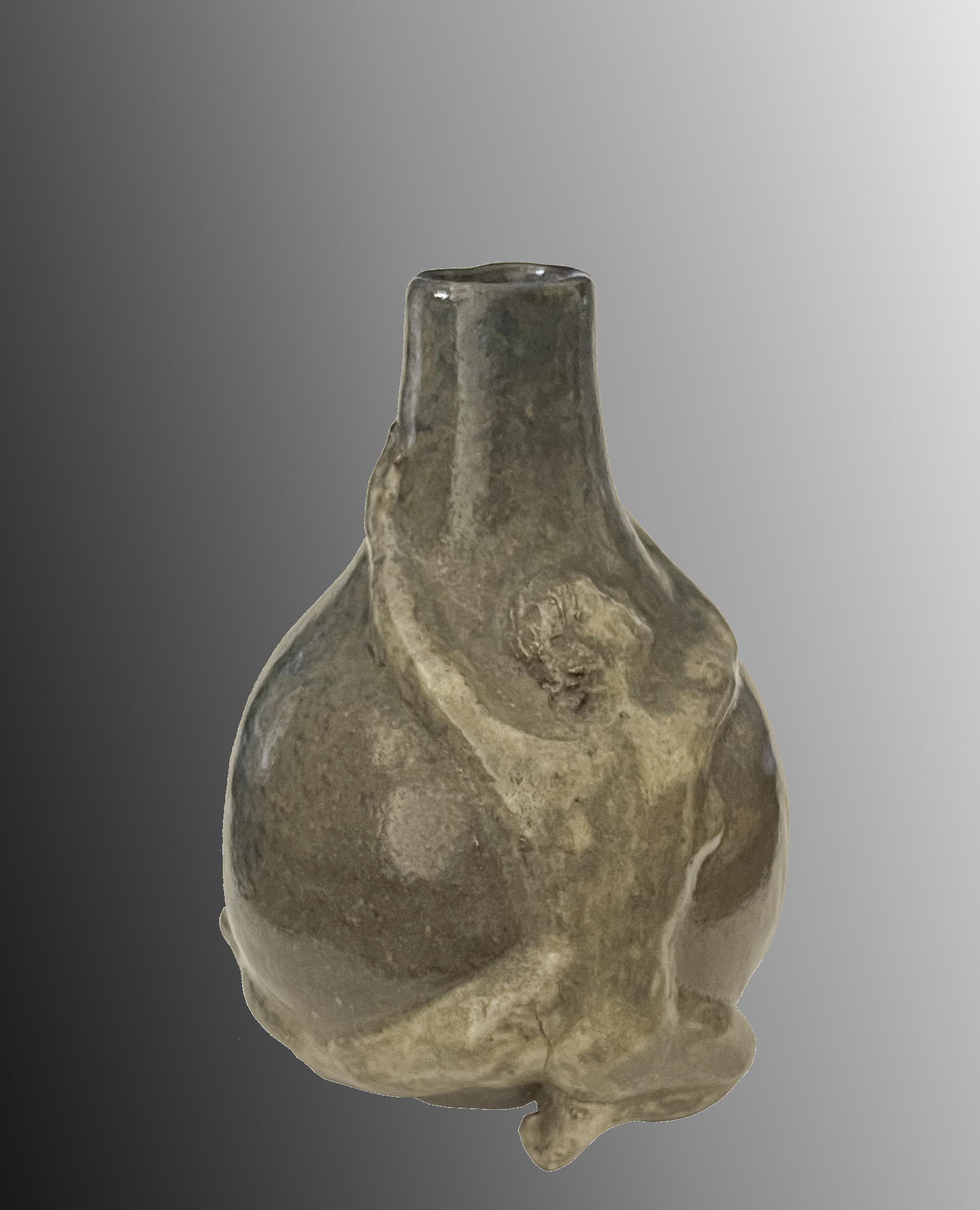
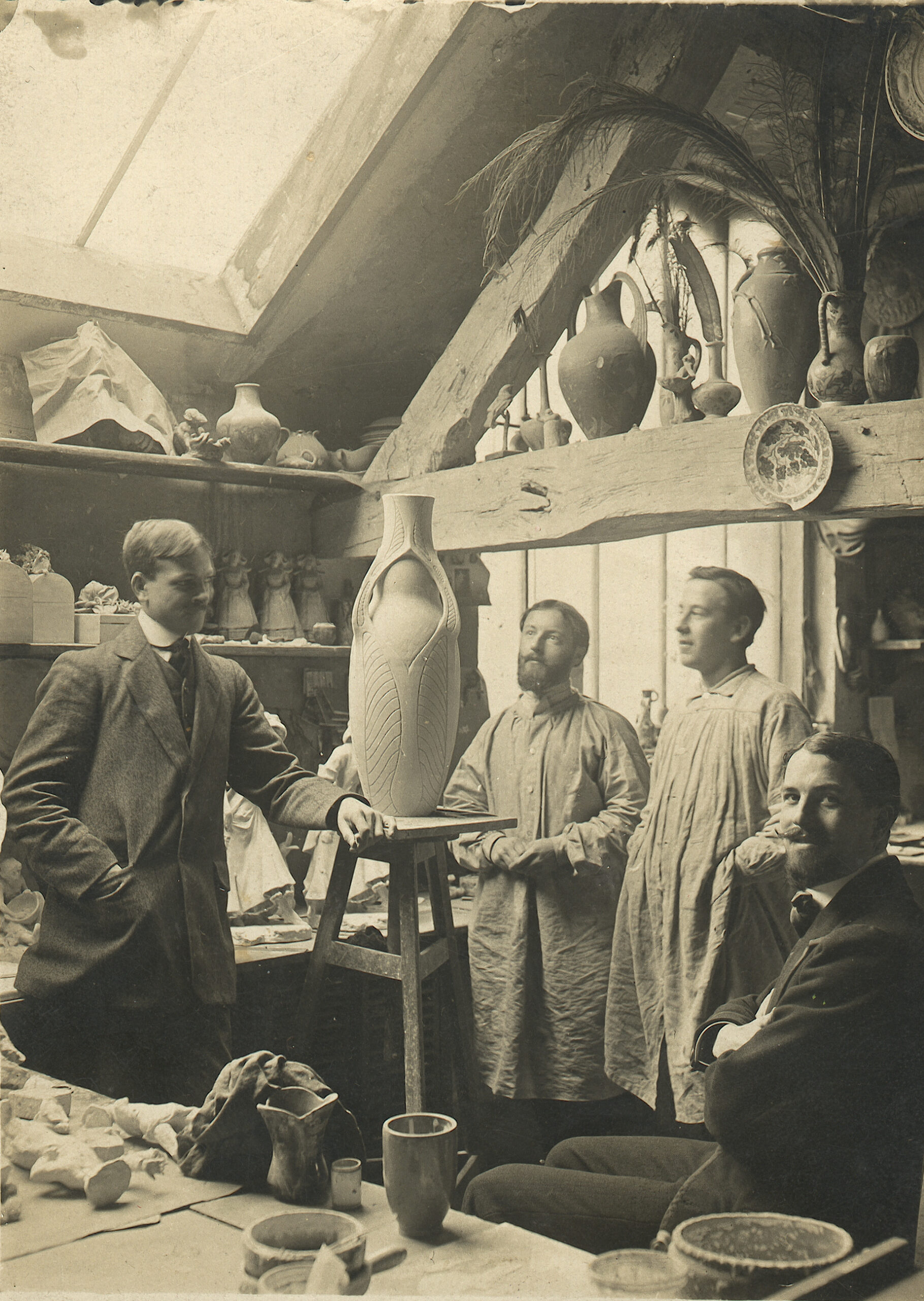
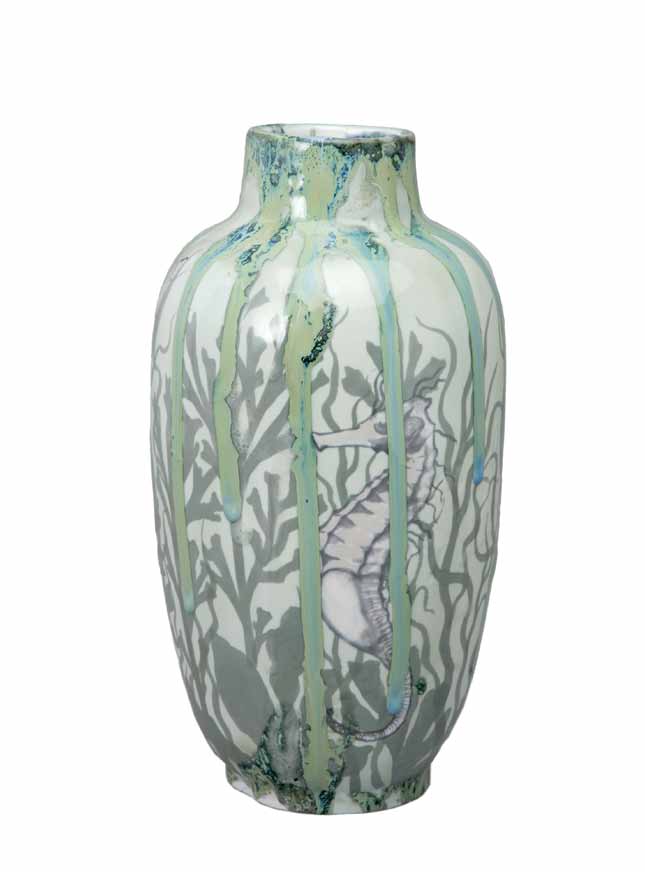
Gabriel and Yvonne Bernardou – Musée du cloître de Tulle, France.
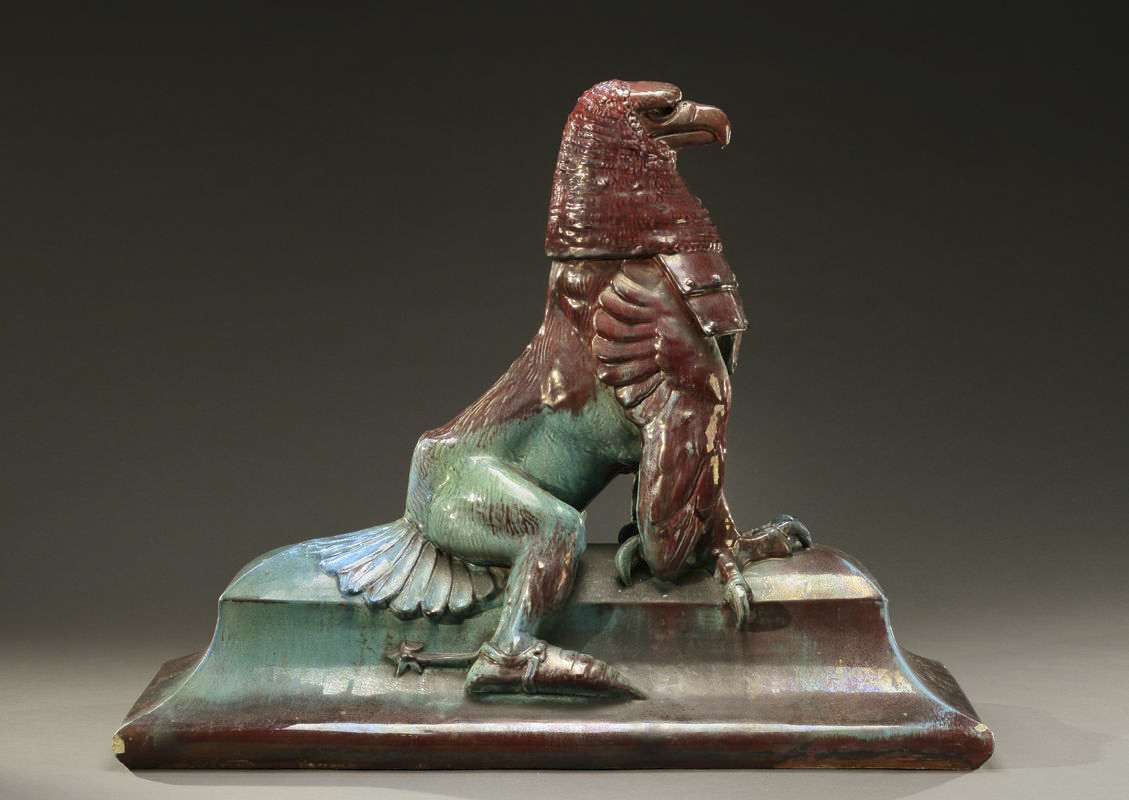
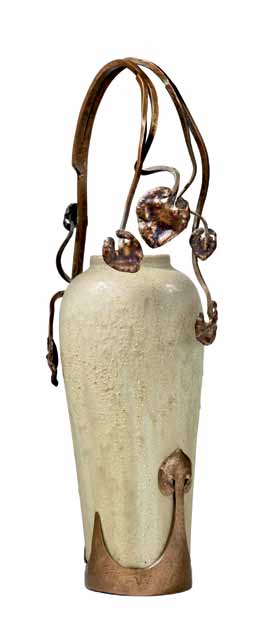
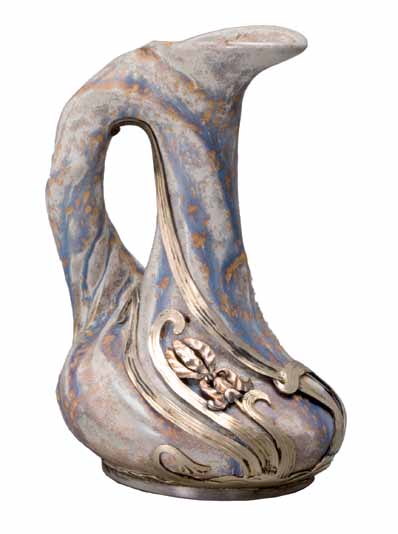
At the end of the 19th century, ceramics thus transcended the limits of simple utilitarian pottery to become a medium illustrating the birth of the modern world. This transformation was favored by the increasing use of pottery as a recognized sculptural medium.
_________________
I am also a member of the administration of two specialized Facebook groups: Art Nouveau Céramiques Group and Art Nouveau / Jugendstil Decorative Arts.
– Art Nouveau Céramiques Group (https://www.facebook.com/groups/172064556275668)
– Art Nouveau / Jugendstil Decorative Arts (https://www.facebook.com/groups/artnouveaudecorativearts).
They currently have 8,631 and 51,460 members worldwide, respectively.
Combining my passion for Art Nouveau with the unexpected success of these two social networks, and faced with a
growing concern that modern society is losing touch with many
unique testimonies of its past, five other group members and I decided to create the Society
for the Preservation of Art Nouveau Decorative Arts (SPANDA). Our goal is to create an
international community of people seriously interested in promoting the appreciation, study, and
preservation of Art Nouveau, and particularly the decorative arts, which are less well protected and less well
contextualized than architectural remains. Our first online meeting was held on October 14, 2023, under the aegis of Ari Blitz, an American collector and
physician. During our first in-person meeting, held in Ålesund, Norway, on August 1, 2025, I
was elected president of the society. SPANDA was subsequently registered in Paris as a non-profit association, under no. W751280908, on September 27, 2025. We are currently in the process of creating our website, our newsletters, and our membership structure before making ourselves known and accepting members. We
hope that SPANDA will become an organization capable of actively promoting Art Nouveau decorative arts globally, as we believe that the dissemination of cultural knowledge is an essential condition for a healthy society.
In conclusion, my conception of expertise is that it must be based on a thorough study of the available
available and the ability to present this evidence objectively and clearly.
If I may quote Einstein (1954,
551): By academic freedom I understand the right to search for the truth and to publish and teach what one holds to
be true. This right also implies a duty; one must not conceal any part of what one has recognized to be true ( By academic freedom, I understand the right to seek the truth and to publish and teach what one holds to be true. This right also implies a duty: that of not concealing any part of what one has recognized as true.)
It is this principle that has guided my work as an archaeologist, historian, collector, and advocate for the study and
preservation of Art Nouveau decorative arts.
On June 12, 2026, Paul Arthur, Professor Emeritus – Università del Salento (Italy)
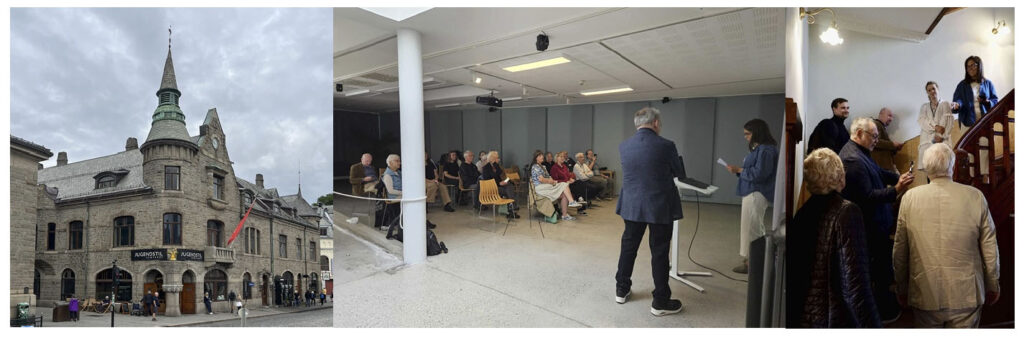
SPANDA, Ålesund, Norway, August 1, 2025
Bibliography
Selected Bibliography:
Monograph:
ARTHUR, Paul, 2015, French Art Nouveau Ceramics. An illustrated dictionary, Ed. Norma, Paris.
Articles:
ARTHUR, Paul, 2011, “Les céramistes du 24, rue de la Quintinie: Baudin, Wolf, Mougin”, in Sèvres. Revue de la Société des Amis du Musée National de Céramique 20, 2011, pp. 126-131.
ARTHUR, Paul, 2014, “Italian sculptors and ceramics in fin-de-siècle France”, in L’arte di studiare l’arte. Scritti degli amici di Regina Poso, Kronos 15, pp. 399-404.
ARTHUR, Paul, 2017, “Alfred Le Chatelier et l’Atelier de Glatigny”, in Sèvres. Revue de la Société des Amis du Musée National de Céramique 26, pp. 108-119.
ARTHUR, Paul, 2010, “Louis Franchet, un maître oublié de la technologie de la céramique”, in Sèvres. Revue de la Société des Amis du Musée National de Céramique 19, p. 143-147.
ARTHUR, Paul, 2019, “Julien-Louis Dupagny (3e), 1878-1958. Élève de Sèvres, « essaimer » de l’Art nouveau”, Un métier,
une passion, ingénieur céramiste, Association amicale des anciens élèves de l’ENSCI. Limoges, p. 31-35.
ARTHUR, Paul, 2024, “A sculptor and a spy: Francesco Giambaldi (1867-1918) from Lecce to Paris”, in M. Nuccio,
E. Pruno (eds.), Floren’a Studi di archeologia, vol. 5 – Special Issue – Studi in onore di Guido Vannini, FUP, Florence, p. 67-79.
Further reading:
D’ALBIS, Jean, 1976, Ernest Chaplet, un céramiste art nouveau. Paris: Les Presses de la Connaissance.
ARWAS, Victor, 2002, Art Nouveau: The French Aesthetic. London: Andreas Papadakis Publisher.
AUREL (Aurélie de Faucamberge, Mme Alfred Mor’er), 1907, “Les tanagra d’aujourd’hui, Louis Dejean”, in L’Art et les
ArFstes (April 1907), p. 21-23.
BARRIER, Monique, and BARRIER, Pascal, 2020, Les Lachenal céramistes, sous le cèdre de Châtillon. Châtillon: Les Amis du Vieux Châtillon.
DUCRET, Marc, and Patricia MONJARET, 1997, L’École de Carriès. L’art céramique à Saint-Amand-en-Puisaye. Paris: Éditions
de l’Amateur.
EIDELBERG, Martin, 2007, “A dynasty of French Ceramists”, in Edmond Lachenal and his Legacy, p. 10–51. New York: Jason Jacques Gallery.
EINSTEIN, Albert, 1954, “Réponses à des questions”, in O. Nathan, H. Norden (eds.), 1960, Einstein on Peace, New York: Simon & Schuster.
FOUREST, Henry-Pierre, ed. 1971. L’Art de la poterie en France de Rodin à Dufy. Sèvres: Société des Amis du Musée national de céramique.
MAKUS, Horst, and BIERI, Helen, DALPAYRAT, André, Jean GIREL, Madeleine STROBEL, 1998. Adrien Dalpayrat. Französische
JugendsFl-Keramik – Céramique française de l’Art Nouveau. Stuttgart: Arnoldsche Verlaganstalt GmbH.
NESLY, Emmanuel, 2026, Grès de Puisaye de Jean Carriès à nos jours. Marques & signatures. Ivry-sur-Seine: Groupe Chaumeil.
THORNYCROFT, Hamo, 1904, “L’Art Nouveau: What is it and what is thought of it? A symposium. – III.”, The Magazine of Art, vol. 2, p. 326.
PELICHET, Edgar, 1976, La Céramique Art Nouveau. Lausanne: Jean-Pierre Laubscher.
RHEIMS, Maurice, 1964, L’Objet 1900. Paris: Arts et Métiers Graphiques.
Contact
Paul ARTHUR
Prof. Emeritus Paul Arthur, FSA,
Department of Cultural Heritage,
University of Salento,
+ 39 (0) 3384045615
paul.arthur@unisalento.it
[UFE number : 516]