
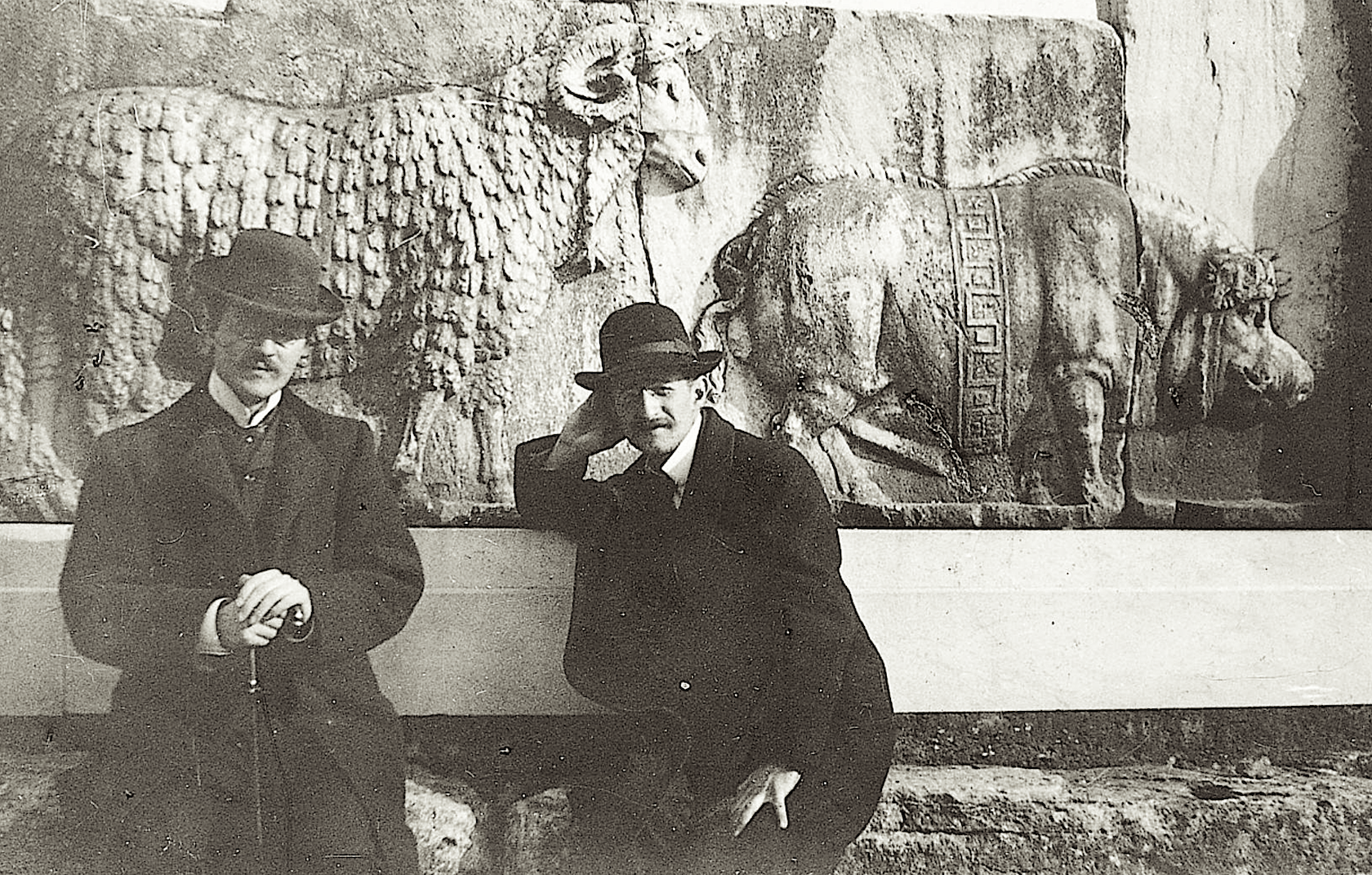
Under the title Michel Puy, Critical Sentinel of the Early 20th Century (Archives Michel Puy editions), Hervé Labrid, grand-nephew of Jean and Michel Puy and Jean Puy expert, has just published what is now the reference work on the critic Michel Puy.
This significant work, based in particular on previously unknown family archives, is accompanied by the re-edition of L’Effort des peintres modernes, which brings together four of the critic’s main art studies (the successors of the Impressionists, modern painters, the Fauves, the foundations of Cubism).
Poet, art writer – as Guillaume Apollinaire described him in 1907 – literary critic, essayist, historian, Michel Puy (1878-1960) developed a polyphonic activity very characteristic of what would later be called the “era of journals.” A contributor to many of them, including La Phalange, Le Divan, Le Beffroi, but also Les Marges and Le Mercure de France (which published his main art essays), he was also the co-founder and director of L’Île sonnante, a literary journal that distinguished itself, in an era teeming with “schools” and “doctrines,” by its independence of spirit. In June 1907, in the journal La Phalange, he published the first study dedicated to the Fauves. He is now recognized as one of the first, if not the very first, to understand that the research of Henri Matisse and his close associates, including Jean Puy, his elder brother, did not constitute a mere succession of individual audacities, but rather manifested the emergence of a new aesthetic.
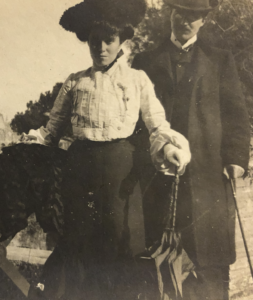
Michel Puy and his partner Marthe, Roman Forum, 1908. © Les Archives Michel Puy, 2026
Strangely enough, nowadays, it is in Anglo-Saxon countries that specialists, academics, and historians, such as Judi Freeman, author of The Fauve Landscape, or Hilary Spurling, Matisse’s biographer, have best understood the role played by Michel Puy in analyzing creative evolution during the period from the late 19th century to the 1930s, by outlining the logic of a succession of artists. Thus, for example, in 1920 he published the first monograph dedicated to the painter Rouault, after having been the first to grant him, ten years earlier in his journal, the status of writer to which the painter aspired.
Through some twenty insights (origins, relations between the Puy brothers, the era of journals, the literary and artistic network, critical method, international renown…), Hervé Labrid’s work restores the variety of Michel Puy’s multiple activities, characteristic of this early 20th century, where art and literature were closely linked, as evidenced by this sentence – quoted in the book – by Pierre Puvis de Chavannes: “I am convinced that without literary preparation, artistic creation cannot be a total work of art.”
To better understand the reception of artistic movements from the late 19th century and early 20th century, Michel Puy, Critical Sentinel of the Early 20th Century, thus stands as a tool of primary importance.
For more information: information@archives-michel-puy.com