
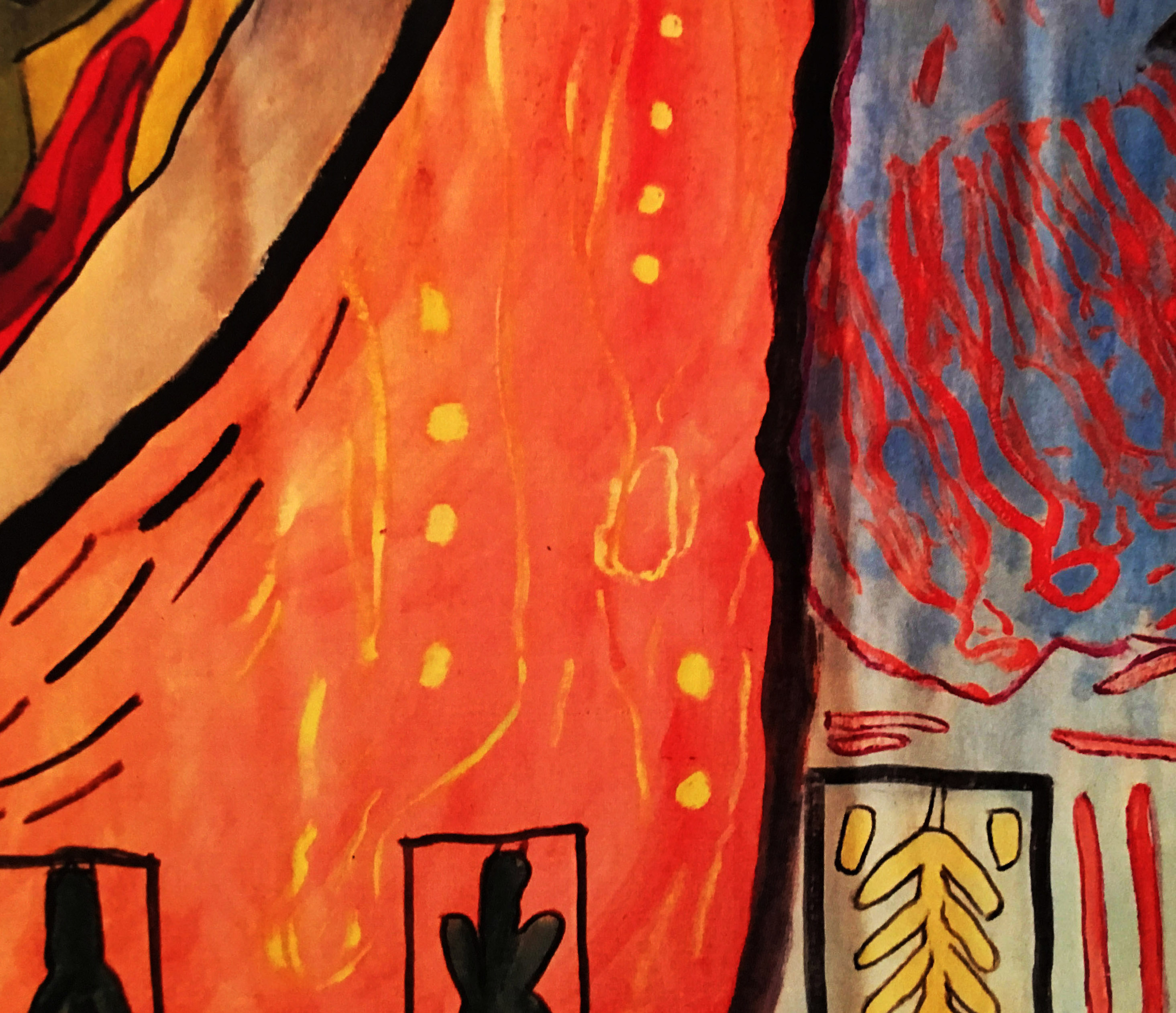
Contemporary art succeeded modern art. Artistic movements that emerged after the Second World War are therefore considered contemporary art.
This includes Action painting, Minimal art, Land art, Hyperrealism, Pop art, Nouveau Réalisme, CoBrA, Kinetic and Op art, Fluxus, Supports/Surfaces, Conceptual art, Nouvelle Figuration, Narrative Figuration, video and digital art, performances, and body art.
Contemporary art is characterized by a behavioral and stylistic renewal, the use of new technologies, and the artistic blending brought about by a diversity of origins. Although it is based on the experiments of modern art, particularly with reference to Marcel Duchamp, it tends to become increasingly diversified.
Works are exhibited by specialized galleries, corporations, museums, state-funded organizations, private collectors, or the artists themselves.
Their preservation and restoration require expert knowledge of currently used techniques, as well as those of the 1950s and 1960s used by rebellious artists who cared little for the longevity of their artistic creations.